
Do I Have Insomnia? A Real Self-Check Beyond Bad Sleep Nights
Maya Hollis, RD
6/9/2026
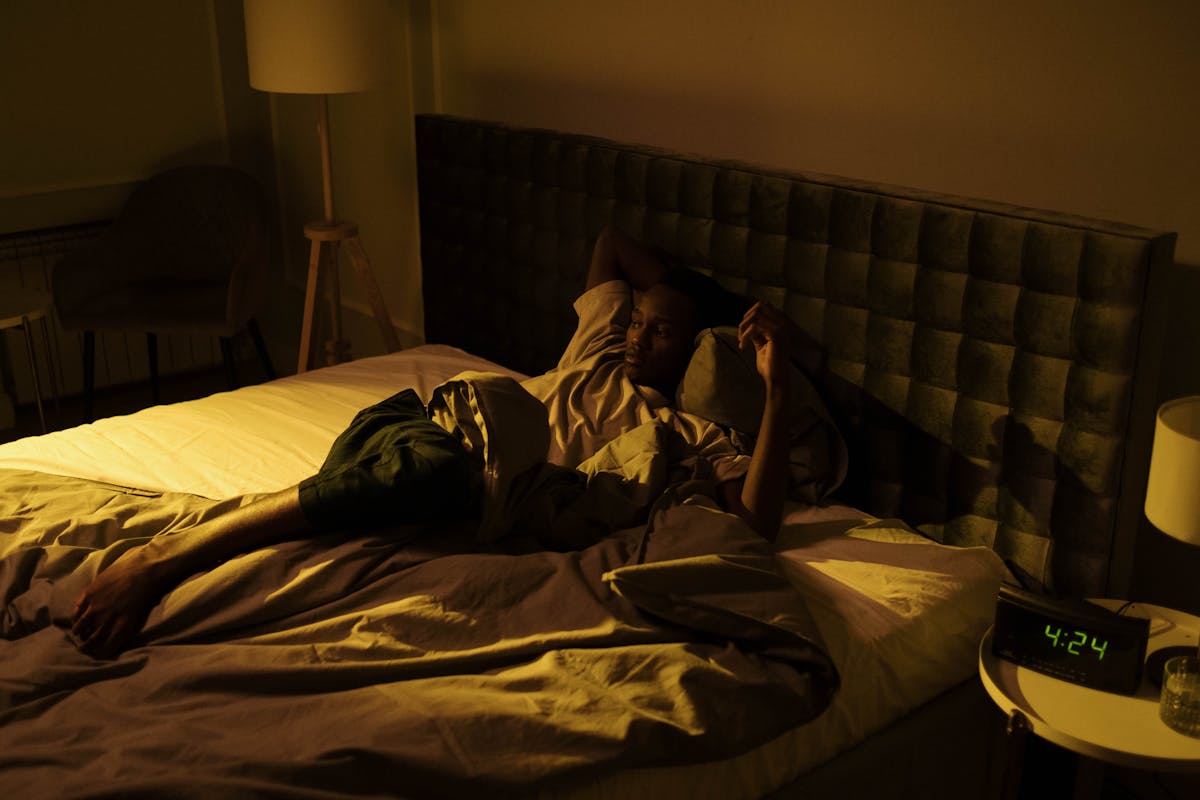
Do I Have Insomnia? A Real Self-Check Beyond Bad Sleep Nights
TL;DR
- Clinical insomnia isn't random bad nights—it's difficulty falling or staying asleep at least 3 nights per week for 3+ months.
- The ISI (Insomnia Severity Index) is the gold standard screening tool used by sleep clinics; it measures onset, maintenance, wake-after-sleep, daytime impact, and distress.
- "Tired but wired" is the #1 insomnia tell: exhausted during the day, yet your nervous system locks you awake at night.
- Short-term situational sleep loss (stress, travel, one-off anxiety) is NOT insomnia—but if it patterns, it becomes insomnia.
- This is a self-reflection tool, not a medical diagnosis; if you score high, bring results to a doctor.
What Is Insomnia, Actually? (Not Just "Bad Sleep")
You've heard the joke: "Me: time to sleep. Anxiety: time for my one-woman show." It's funny because it's universal. But when does that one-woman show become insomnia?
The difference is the pattern.
According to the DSM-5 (the diagnostic bible used by psychiatrists), insomnia is persistent difficulty falling or staying asleep with three things present:
- It happens at least 3 nights per week — not just the night before a work presentation.
- It's been happening for 3+ months — not a two-week rough patch after a breakup (that's adjustment-related sleep disturbance, not insomnia).
- It causes measurable daytime distress or dysfunction — you're impaired at work, irritable, foggy, or anxious about sleep itself.
That's it. It's not about needing 8 hours or sleeping perfectly. It's about frequency, duration, and real-world impact.
The trap most people fall into: they experience one month of bad sleep and convince themselves they have "chronic insomnia." Then they catastrophize, which makes the anxiety worse, which makes sleep worse—and suddenly it becomes insomnia. The cognitive loop is real.
The "Tired But Wired" Paradox — The #1 Insomnia Tell
This is the maddening core of insomnia: you are exhausted, yet your body won't let you sleep.
You're dragging all day. Coffee doesn't touch it. You'd sell your phone for a 20-minute nap. But the moment your head hits the pillow, your brain turns on. Racing thoughts. Checking the clock. Doing math about how many hours you have left. Hyper-aware of every sound in the house.
This isn't laziness or weakness. Your nervous system is stuck in "on." You're literally too wired to sleep, even though you're exhausted. Anxiety platforms like Careica Health flag this exact phrase—"tired but wired"—as among the top sleep-related Google searches, and for good reason. It's the signature experience of insomnia.
What's happening: Chronic stress, anxiety, or sleep deprivation itself triggers your sympathetic nervous system (fight-or-flight). Your body pumps cortisol and adrenaline at night when it should be producing melatonin. You're physiologically unable to wind down, not unwilling.
This is why behavioral sleep medicine works: it's not about "trying harder to sleep" (which makes anxiety worse). It's about systematically calming your nervous system and breaking the anxiety-about-sleep feedback loop.
The ISI (Insomnia Severity Index) — The Gold Standard Self-Test
If your doctor suspects insomnia, they don't just ask "do you sleep poorly?" They use the Insomnia Severity Index, a 7-question validated screener developed by sleep researchers. It's the standard because it measures the pattern and impact, not just "am I sleepy."
The ISI asks about:
- Difficulty falling asleep — how often in the last 2 weeks?
- Staying asleep / waking too early — frequency and severity.
- Waking in the middle of the night — how much does it bother you?
- Early-morning awakening — waking 30+ min before you want to.
- Daytime consequences — fatigue, mood, concentration, ability to function.
- How noticeable is the problem to others — are you clearly struggling?
- How distressed or frustrated are you about it — is sleep anxiety itself the problem?
Scores: 0–7 = no insomnia · 8–14 = subthreshold (mild, situational) · 15–21 = moderate insomnia · 22+ = severe insomnia.
Why this matters: A high ISI score is what gets you a sleep study referral, not just "I'm tired." It separates people who had a bad week from people with a disorder.
The 3-Month / 3-Night Rule — When Bad Sleep Becomes Insomnia
Here's the clinical threshold:
If you've struggled with sleep at least 3 nights per week for 3 or more months, you meet the diagnostic duration and frequency criteria for insomnia. (Assuming daytime impact.)
Why 3 months? Because:
- Less than 3 weeks = acute stress response (normal, usually resolves when the stressor does).
- 3 weeks to 3 months = subthreshold / adjustment insomnia (you might need intervention, but it hasn't hardened into a chronic pattern yet).
- 3+ months = the brain has learned to expect sleep to be hard, and the anxiety-sleep loop is self-sustaining. This is when you need active treatment, not just "let it pass."
The frequency: 3+ nights/week matters because:
- 1–2 nights/week for months might be situational (your schedule, a noisy roommate, allergies).
- 3+ nights/week means the problem is intrinsic to you, not external. Your nervous system is the issue.
This is why the self-test is useful: it forces you to count. "Well, some weeks I sleep fine, other weeks I'm up all night" — that's actually the pattern that meets criteria if it's been happening for months.
Onset vs. Maintenance vs. Early-Morning — Different Types, Different Triggers
Insomnia isn't one thing. The ISI breaks it into subtypes, and knowing yours helps:
Sleep Onset Insomnia
"I lie awake for 30+ minutes trying to fall asleep."
Common triggers: Racing thoughts, anticipatory anxiety, ADHD, caffeine/stimulant overuse.
This is the "anxiety: time for my one-woman show" type. Your mind won't shut off. Often responds well to cognitive-behavioral therapy (CBT), meditation, or addressing the underlying anxiety.
Sleep Maintenance Insomnia
"I fall asleep fine, but wake up at 2 or 3 AM and can't get back to sleep."
Common triggers: Stress hormones spiking mid-sleep, sleep apnea (must rule out), bladder issues, partner's snoring.
This one is tricky because you can sleep—but your nervous system jolts you awake when it shouldn't. Often worse in phases of high stress or in people with hypervigilance.
Early-Morning Awakening
"I wake up at 4:30 or 5 AM and can't fall back asleep, even though I'm tired."
Common triggers: Depression (classic sign), cortisol spike, menopause/hormonal shifts, aging.
This one has a "biological" flavor—your circadian rhythm is shifted or your mood is dragging your sleep earlier. Often benefits from light therapy, antidepressants if depression is involved.
What This ISN'T (Common False Alarms)
"I had a terrible week and barely slept."
Not insomnia. That's acute stress or situational sleep disruption. Give it 2–4 weeks. If it resolves, you don't have insomnia.
"I sleep 6 hours instead of 8 and feel fine."
Not insomnia. Some people are naturally 6-hour sleepers. Insomnia is dysfunction + distress, not a number.
"I'm tired all the time, but I sleep 9 hours a night."
Not insomnia (it's probably fatigue from another cause—hormones, depression, anemia, long COVID). Insomnia is specifically sleep quality/efficiency, not total sleep time.
"I only sleep badly when I'm stressed."
Not chronic insomnia (it's situational). If stress resolves and sleep returns to normal, you're responding normally to stress. Only becomes insomnia if the bad sleep persists after the stressor is gone.
"I worry about sleep, but I actually sleep fine."
Not insomnia (it's anxiety about sleep). Insomnia requires actual sleep disturbance plus the worry. But this anxiety can become insomnia if it keeps you awake.
Take the Self-Check
Before you assume you have insomnia, take the ISI-based quiz at /quiz/my-sleep-fix. It will ask you about frequency, duration, daytime impact, and distress—the same questions a sleep specialist would ask.
Your result will tell you:
- No insomnia — you're dealing with normal sleep variation or situational stress.
- Subthreshold / Mild — you're on the edge, and lifestyle changes or stress reduction might prevent it from progressing.
- Moderate to Severe — you meet clinical criteria and should see a sleep specialist or therapist.
What to Do If Your Score Is High
See a Sleep Specialist
A sleep doctor will rule out sleep apnea, restless-leg syndrome, circadian-rhythm disorders, and other medical causes. You might need a sleep study. Don't self-treat if you don't know the cause.
CBT-I (Cognitive-Behavioral Therapy for Insomnia)
This is the first-line evidence-based treatment. It rewires your relationship with sleep and your bedroom. Not medication; behavioral. Highly effective.
Sleep Hygiene (But Not Just the Basics)
Yes, dark room + cool temperature. But also: no clock-watching, no "trying hard" to sleep, no screens an hour before bed, no caffeine after noon. The real skill is not catastrophizing when you can't sleep.
Address the Root
Is it:
- Anxiety? Therapy or meds.
- Stress? Meditation, exercise, life changes.
- Caffeine, alcohol, or poor timing? Dial those in.
- Hormonal? Check with a gynecologist or endocrinologist if perimenopause, menstruation, or thyroid is suspected.
FAQ
Q: I wake up once in the middle of the night, usually. Is that insomnia?
A: One waking per night is normal. Most people have 2–4 micro-arousals. Insomnia is if you can't get back to sleep and it's happening 3+ nights/week for months. If you wake, take 5–10 minutes to fall back asleep, and you're functioning fine, you're fine.
Q: Does insomnia go away on its own?
A: Short-term situational insomnia (weeks to a couple months) usually resolves when the stressor does. Chronic insomnia (3+ months) does NOT resolve on its own—in fact, it often worsens because anxiety about sleep becomes a problem itself. You need active treatment (CBT-I, therapy, lifestyle changes).
Q: Can I have insomnia if I sleep 7 hours but feel exhausted all day?
A: Possibly. The ISI measures quality not quantity. If you're sleeping 7 hours but waking repeatedly, or taking forever to fall asleep, you have low sleep efficiency—which counts. But also check for sleep apnea, depression, or other health issues that can cause fatigue despite sleep.
Q: Is "tired but wired" the same as anxiety?
A: Tired but wired is a symptom of high anxiety or stress-response; it's what your nervous system does when it's stuck in fight-or-flight at bedtime. So yes, it's anxiety-driven, but the solution isn't just "relax"—it's retraining your nervous system via CBT-I, meditation, or therapy.
Q: How is this quiz different from just asking my doctor?
A: This quiz uses the ISI framework—the same tool clinicians use. It gives you a score and context so you can walk into your doctor's appointment with language and data, not just "I sleep badly." You're more likely to get taken seriously and referred to a sleep specialist if needed.
The Bottom Line
One bad night is life. A bad week is stress. A bad three months is insomnia—and it's worth taking seriously.
If you're asking "do I have insomnia?" the honest answer is: take the quiz and count. Three nights or more per week, for three months, with daytime impact = yes, clinical insomnia. Anything less = not yet, but pay attention.
The good news: insomnia is one of the most treatable psychiatric conditions. CBT-I works. Sleep specialists exist. You're not broken. Your nervous system just needs to remember how to be off.
Take the ISI-based self-check quiz now. Five minutes. You'll know where you stand.
Want a personalized read on this? Take the ISI Sleep Quiz — a few minutes, instant results.
Related Articles

Why Am I Always Bloated? 9 Common Causes (and How to Find Yours)
If you're bloated by mid-afternoon every single day, it's usually not 'just what you ate.' Here are the 9 real causes of chronic bloating and how to pinpoint yours.
Am I Sleep Deprived: 5 Hidden Signs You're Running on Empty
You sleep 8 hours and wake exhausted. Your brain feels foggy. You're snapping at people. These aren't laziness—they're signs your body is running a sleep debt you probably don't realize.

Am I Tired All the Time? Why You're Exhausted and How to Know If It's Your Hormones
You sleep 8 hours and wake up feeling like you got hit by a truck. Here's what's actually going on—and how to tell if it's your hormones, stress, or something else.