
What Type of Insomnia Do I Have? Onset vs. Maintenance vs. Early-Morning
Dr. Priya Nair
6/13/2026
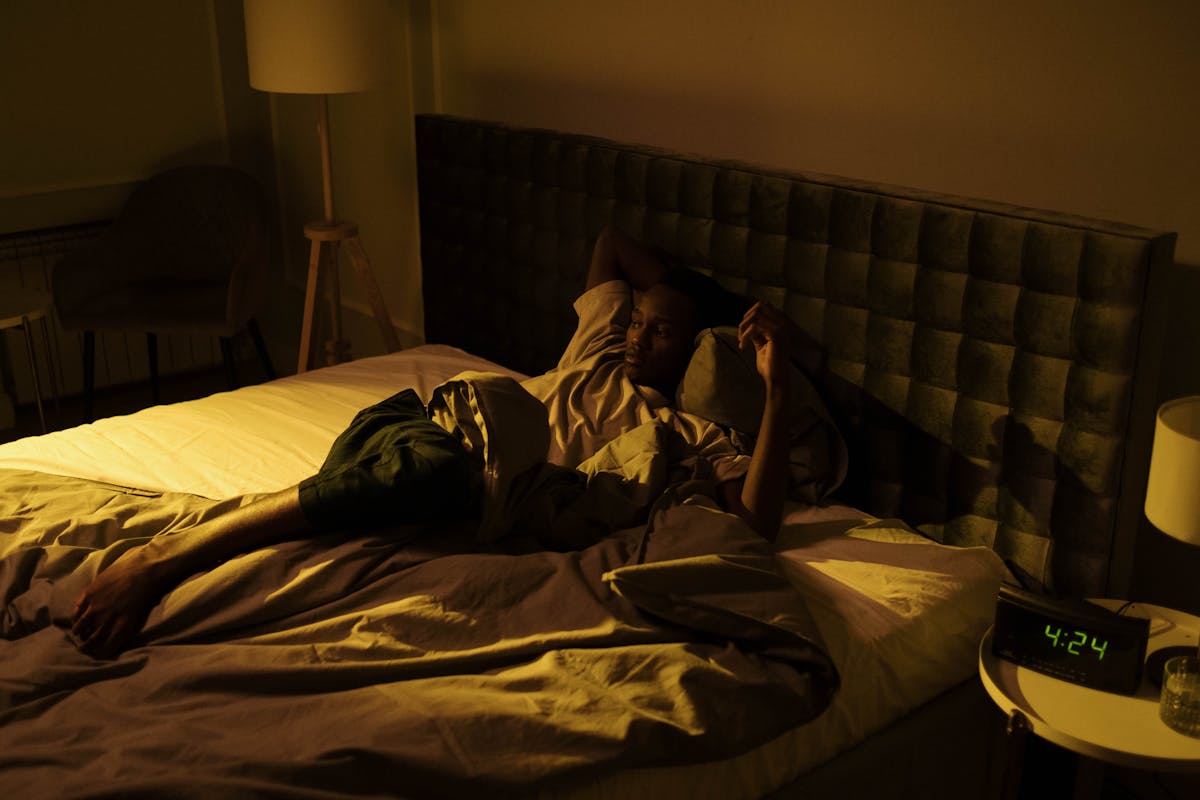
What Type of Insomnia Do I Have? Onset vs. Maintenance vs. Early-Morning
TL;DR:
- Sleep-onset insomnia (can't fall asleep): usually anxiety, racing thoughts, or overstimulation; fixed with wind-down routines and cognitive behavioral therapy
- Sleep-maintenance insomnia (wake up multiple times): stress, poor sleep architecture, or hormonal shifts; needs sleep consolidation and stress management
- Early-morning insomnia (wake at 3–5am): often depression, cortisol dysregulation, or circadian shifts; responds to morning light exposure and mood screening
- Different types need different fixes—a white-noise machine won't help if your brain wakes at 3am
You're Not Just "Not Sleeping"—You Have One of Three Distinct Patterns
When someone says "I have insomnia," they could mean three completely different things. That's why generic fixes fail: the Insomnia Severity Index (ISI), used by sleep clinics and the American Academy of Sleep Medicine, divides insomnia into three types based on when the problem happens: onset (falling asleep), maintenance (staying asleep), and early-morning awakening. Each has different causes and needs different solutions.
A person waking at 3am and lying awake for two hours has a fundamentally different problem than someone staring at the ceiling for 90 minutes before bed. The neurochemistry is different. The intervention is different. Take the insomnia quiz to identify your type and stop wasting energy on fixes that don't work.
Sleep-Onset Insomnia: The Racing-Brain Problem
What it feels like: You get into bed. Immediately your mind starts a slideshow. Worry about tomorrow's meeting. Scrolling through your to-do list. You lie there for 30–90 minutes—completely alert—waiting for sleep that doesn't come. You're not tired. You just can't turn your brain off.
The root cause: Sleep-onset insomnia is a nervous-system regulation problem, not a tiredness problem. Your brain is stuck in a heightened state. Common triggers: anxiety or rumination, blue light from screens, afternoon caffeine, or performance anxiety about sleep itself.
What actually works:
- Cognitive behavioral therapy for insomnia (CBT-I) — The gold standard, backed by research showing 70–80% improvement within 4–8 weeks
- Wind-down routines — 30–60 minutes before bed: no screens, dim lights, something rhythmic (reading, stretching, or a "worry window" where you write down concerns before bed)
- Cool, dark room with no devices
- Avoid clock-checking — Checking the time creates pressure and wakes you more
Sleep-Maintenance Insomnia: The Fragmented-Night Problem
What it feels like: You fall asleep fine. But at 2am or 3:30am—you're awake. You might toss and turn, fully wake for 30 minutes, drift back off, then wake again. You get some sleep but it's choppy. You never feel like you hit deep sleep.
The root cause: Your sleep is being fragmented by stress, hormonal shifts, poor sleep environment, alcohol, or undiagnosed sleep apnea. Your nervous system stays alert even when asleep, waking at minor stimuli.
What actually works:
- Sleep consolidation — Spend less time in bed (go to bed later or wake earlier). Counterintuitively, this increases sleep quality.
- Address stress first — Therapy, meditation, or exercise must come before supplements
- Eliminate alcohol — It destroys sleep architecture even if it helps you fall asleep
- Optimize environment — Cool (65–68°F), dark, quiet. Quality mattress matters.
- Screen for sleep apnea — Especially if you snore or wake gasping
Early-Morning Insomnia: The 3AM Awakening Problem
What it feels like: You fall asleep normally. Then—reliably at 3am, 4am, or 5am—you wake fully alert. Your mind is active. You lie there 1–2 hours unable to sleep. You eventually drift back off but wake exhausted because you've missed deep-sleep hours and your cortisol is rising.
The root cause: Early-morning insomnia is linked to circadian rhythm and hormonal patterns: depression or low mood, cortisol dysregulation from chronic stress, perimenopause/menopause, age-related shifts, or light exposure triggering early cortisol spikes.
What actually works:
- Bright light exposure in the morning (6–8am, natural light or 10k lux light box) — Anchors your circadian rhythm and improves early-morning sleep quality
- Screen for depression — Early-morning waking is a classic early-depression symptom; it's treatable
- Stress management and reduced caffeine — Normalizes cortisol rhythm
- Blackout curtains — Keep bedroom dark until your desired wake time
- Avoid clock-watching — Creates anxiety and wakes you more
Red flag: Persistent early-morning waking before 5am warrants a doctor visit—it can signal depression, which is treatable.
How to Identify Your Type
- When does the problem happen? Fall asleep → Onset. After 3+ hours → Maintenance. Between 3–5am → Early-morning.
- How often? 3+ nights/week for 3+ weeks = clinically significant; see a doctor. A few nights = lifestyle factor.
- What's your mind doing? Racing/anxious → Onset. Drifting in/out → Maintenance. Heavy/moody → Early-morning.
- When do you feel worst? Morning → Early-morning. Evening → Onset.
FAQ: Real Questions
Q: Can I have more than one type?
A: Yes. Prioritize the most disruptive first—usually early-morning or maintenance are hardest to self-fix. Onset often responds fastest to behavior changes.
Q: Does my type matter for medication?
A: Absolutely. A sleep specialist will ask your type because the drug class changes. Sleep-onset might need a short-acting sedative; early-morning might need a longer-acting one or an antidepressant if mood is involved. Identifying your type gives your doctor a clear starting point.
Q: I tried melatonin and it didn't work. Does that mean I have the wrong type?
A: Melatonin is most effective for sleep-onset insomnia. If it didn't work, you likely have maintenance or early-morning insomnia, where the problem is fragmentation or deep circadian/mood issues—not a melatonin signal. Worth taking the quiz to confirm.
Q: Is "revenge bedtime procrastination" a type of insomnia?
A: No. Revenge bedtime procrastination is intentionally staying up because you didn't have free time during the day. Insomnia is wanting to sleep but not being able to. The fix is protecting daytime free time, not a sleep protocol.
Q: Should I fix this myself or see a doctor?
A: If it's occasional or clearly tied to stress, self-help works. If it's persistent (3+ nights/week for 3+ weeks), disruptive, or accompanied by depression, see a doctor or therapist. They can rule out sleep apnea, hormonal issues, or mood disorders and refer you to CBT-I, the gold standard. Identifying your type first makes that appointment way more productive.
The Point
Insomnia isn't one problem. It's three problems with different causes and different fixes.
Sleep-onset is your nervous system saying "I'm still processing." Maintenance is your sleep being fragmented by stress, environment, or medical issues. Early-morning is your body's rhythm or mood waking you too early.
Once you know which one you have, the fix becomes clear. Find your insomnia type to get personalized guidance for your specific sleep problem. This is a self-reflection screening tool, not medical advice—consult your doctor for persistent sleep issues.
Want a personalized read on this? Find Your Insomnia Type — a few minutes, instant results.
Related Articles

Why Am I Always Bloated? 9 Common Causes (and How to Find Yours)
If you're bloated by mid-afternoon every single day, it's usually not 'just what you ate.' Here are the 9 real causes of chronic bloating and how to pinpoint yours.
Am I Sleep Deprived: 5 Hidden Signs You're Running on Empty
You sleep 8 hours and wake exhausted. Your brain feels foggy. You're snapping at people. These aren't laziness—they're signs your body is running a sleep debt you probably don't realize.

Am I Tired All the Time? Why You're Exhausted and How to Know If It's Your Hormones
You sleep 8 hours and wake up feeling like you got hit by a truck. Here's what's actually going on—and how to tell if it's your hormones, stress, or something else.