Dating App Burnout: Are You Exhausted or Just Swiped Out?
Tara Lindqvist
6/18/2026
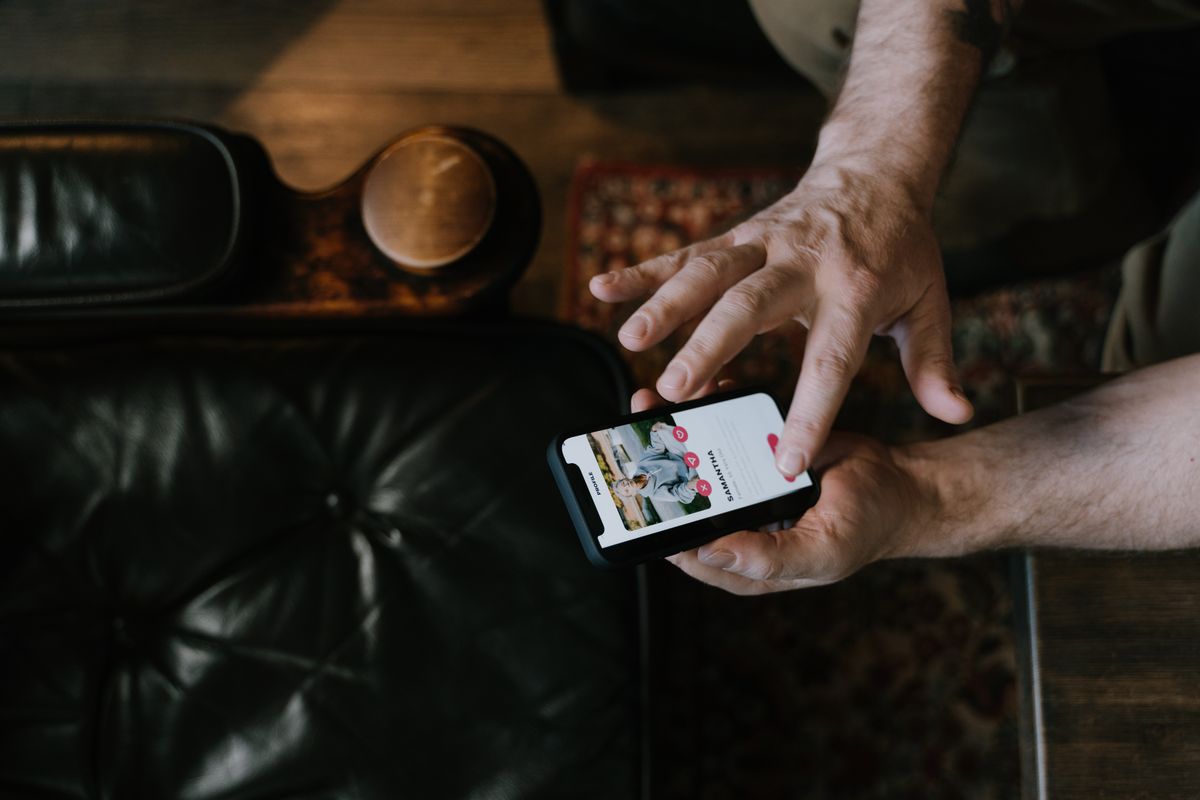
Dating App Burnout Quiz: Are You Exhausted or Just Swiped Out?
TL;DR:
- Dating app burnout is real: chronic low-level rejection, choice overload, and the pressure to stay "on" financially drains your capacity to connect.
- It's not laziness; it's depletion. Burnout makes you numb to profiles that might otherwise interest you.
- The 5 signs: scrolling without hope, ghosting others, decision fatigue on first dates, taking matches personally, feeling obligated to keep swiping.
- A burnout quiz can tell you whether rest or a reset is what you need—not another date.
What Is Dating App Burnout?
Dating app burnout is the mental and emotional exhaustion that comes from extended engagement with dating apps, especially when the effort-to-outcome ratio tips past sustainable. It's not the same as being single and tired, or discouraged after a bad date. It's the cumulative depletion of hope, novelty, and social energy across months of swiping, unmatching, and navigating the paradox of choice.
Unlike job burnout, which develops from overwork and institutional stress, dating app burnout emerges from three specific pressures:
- Chronic low-level rejection — Every swipe left is a micro-rejection; every unmatched conversation is a door closing. Over 1,000 swipes, this compounds.
- Choice paralysis and fatigue — Too many options make it harder to commit to any single conversation; you keep hoping the next profile is "better."
- The obligation to stay engaged — The implicit pressure that if you delete the app, you're "giving up" on dating. So you stay, burnt out but trapped.
The result: you start scrolling without hope, responding slower, or worst, ghost people who invested in you—not because you're cruel, but because you're too depleted to care about the social cost.
The 5 Signs of Dating App Burnout
1. You Swipe Without Hope
You open the app and immediately feel a pit in your stomach. No one on the feed looks like "the one," but you swipe anyway—mostly left, sometimes right on autopilot, not because you're excited. The novelty has died; swiping has become habit, like checking email.
What this signals: Your nervous system has downregulated hope. You're not rejecting people critically; you're numb.
2. You're Ghosting or Slow-Fading People
You match, exchange a few messages, and then... you stop replying. The conversation feels like a chore. You don't hate the person, but you can't muster the energy to be present in the exchange. You'll come back to it "later," except later never comes.
What this signals: Your social bandwidth is depleted. You're no longer able to show up generously, even for people you might otherwise like.
3. First Dates Feel Like Obligations
You have a date and feel dread beforehand. Not nervousness—dread. You have to "perform" being interested, ask questions, seem engaged. By the second round of drinks, you're already thinking about the next thing you need to do. The person is fine, but you're going through the motions.
What this signals: The emotional labor of dating has become unsustainable. You've lost the capacity to be vulnerable or curious with a stranger.
4. You Take Every Rejection Personally (or Not at All)
Either extreme is a burnout tell: you spiral when someone doesn't reply, interpreting it as confirmation you're unlovable. Or—more commonly in advanced burnout—someone unmatches and you feel nothing, because you've been rejected so many times it's just numbers now.
What this signals: Your emotional regulation has been destabilized by repeated small rejections. You're either hypervigilant or completely dissociated.
5. You Stay on Apps You Hate
You've swiped on Hinge, Bumble, and Match for so long that you forget why you started. You tell yourself, "If I delete it, I'm admitting defeat," so you keep the apps, opening them out of obligation, not hope. The sunk cost—time invested, matches lost, the fear of starting over—keeps you trapped.
What this signals: You've conflated app use with dating potential. You believe staying on = staying open, even though the opposite is happening.
How Dating App Burnout Differs from Regular Burnout (and Why It Matters)
Work burnout spreads across your entire life—you're exhausted at 9am on Monday because the system is unsustainable. Dating app burnout is often compartmentalized: you feel fine at work, energized with friends, but the moment you open the app, the weight hits.
This makes it harder to spot. You might not call it "burnout"—you might just think you're "bad at dating" or "unlucky." But the research on burnout from Cleveland Clinic and Integris Health points to a consistent pattern: burnout is depletion from a system, not a character flaw. When the system (dating apps) is the problem, the solution isn't "try harder" or "be more positive." It's stepping away.
However, not all dating-app fatigue is burnout. Some of it is legitimate information—you've learned what you want or don't want. That's not exhaustion; that's clarity. The difference: clarity energizes you ("Now I know what I'm looking for"), while burnout numbs you.
The Connection Between App Fatigue and Burnout Signals
Dating app burnout doesn't exist in isolation. It correlates strongly with the wider burnout symptoms documented in burnout research:
- Emotional exhaustion: You feel drained by interactions you'd normally find energizing.
- Cynicism / depersonalization: You see matches as "not real people" or interchangeable profiles, not humans.
- Reduced efficacy: You doubt your ability to find someone compatible, even though intellectually you know people meet on apps.
In fact, a 2024 study by Mentor Research found that men report disillusioning with dating apps at higher rates after 6+ months of use—not because they're pickier, but because the effort-to-match ratio exhausts their emotional reserves. Women report similar fatigue around the "quality conversation" depletion (matching with someone who turns out to be unseriousness or incompatible).
The burnout quiz asks: Are you exhausted from the system, or from dating itself? That's the load-bearing question.
When to Take a Break vs. When to Strategize
Take a break if:
- You're swiping without hope for weeks on end.
- You've started ghosting people reflexively.
- The thought of a first date triggers dread, not anticipation.
- You're staying on apps out of fear ("if I delete it, I'm admitting defeat"), not desire.
Try a reset instead if:
- You're occasionally discouraged but still feel sparks of interest.
- You match with someone and genuinely want to know them—you're just tired of the volume.
- You recognize you're swiping at the wrong time (late at night, stressed, etc.).
A reset might look like: delete all but one app, set a swiping limit (30 min/day), take a 1-week app break, or shift to in-person venues (classes, events, bars) where the stakes feel different because there's no algorithm middleman.
But if you're in full burnout—numb, ghosting, joyless—a reset won't fix it. You need actual time off to let your capacity for hope and vulnerability return.
FAQ
Is dating app burnout the same as being single and tired?
No. Being single and tired is situational—you're lonely, you haven't met the right person yet, the market feels discouraging. That's information. Burnout is depletion—you've lost the capacity to engage even if the right person showed up. If someone sent you a perfect first message tomorrow, would you feel relieved and excited, or would you feel... obligated? If it's obligation, that's burnout.
Can dating app burnout be permanent?
No, but it requires real rest, not just deleting the app and immediately signing up for a different one. Burnout recovery (even in work contexts) typically takes weeks to a few months. For dating apps, most people need 4–8 weeks of complete app silence before they feel the spark return. If you've been on apps for 12+ months continuously, expect the recovery to take longer.
Does dating app burnout mean I don't want to date?
Not necessarily. Burnout is about the system, not the goal. You might desperately want a partner—but the swipe-based, algorithm-driven system has drained you. Some people recover hope by switching to apps with fewer options (niche dating apps, for example), or by moving entirely to in-person dating (classes, church, meetups, friend introductions). The desire to partner might be intact; it's the app channel that's broken.
What if I take a break and the burnout comes right back?
That's a signal the problem isn't the apps, it's the context. Are you swiping late at night when you're tired and critical? Are you comparing yourself to other profiles? Are you in a scarcity mindset ("I have to find someone NOW")? Those upstream pressures will regenerate burnout no matter what app you use. A therapist or coach might help more than another break.
Can you "optimize" dating apps to avoid burnout?
Partially. Limiting daily swiping time, turning off notifications, and focusing on quality conversations over volume helps. Some people find success by using apps strategically (e.g., Hinge for "looking to date," not Tinder). But if the underlying context—scarcity, pressure, comparison—is still present, optimization will only slow the burnout, not prevent it. You can't productivity-hack your way out of a fundamentally depleting system.
Ready to Assess Your Burnout Level?
The dating profile grader quiz goes deeper: it evaluates not just fatigue, but whether your profile might be attracting matches that are fundamentally incompatible—which can turbo-charge burnout. A great profile attracts the right people; a mediocre one attracts either no one or the wrong people, both of which drain you faster.
If you suspect you're in dating app burnout, start with the self-assessment above. Then take our dating app burnout quiz to spot the specific signals and get a recovery roadmap.
Remember: this is a self-reflection tool, not a diagnosis. If dating—apps or otherwise—is tangled up with deeper shame, loneliness, or desperation, talking to a therapist trained in relationship anxiety might help more than a quiz ever will. But if you're just burnt out on apps specifically? You're not broken. You're just depleted. And depletion is reversible.
Want a personalized read on this? Take the Dating App Burnout Quiz — a few minutes, instant results.
Related Articles
Your Dating Profile Is Quietly Repelling Great Matches—Here’s the 8-Part Fix (Backed by Science)
Most profiles fail for predictable reasons: weak first impression, vague bio, and zero conversation hooks. Here’s the science—and the fix.
Your Dating Profile Is Being Judged in 0.1 Seconds—Fix These 7 Things (Then Grade It)
Most profiles fail for predictable reasons: the wrong first photo, vague prompts, tiny “trust leaks,” and avoidable text mistakes. Here’s how to fix yours—fast.

Why Your Dating Profile Isn’t Getting Matches (And the 8 Signals Apps Actually Rank You On)
Your dating profile is being judged by invisible rules. Learn the psychology behind swipes and how to optimize the 8 traits that matter most.