
Why Do I Wake Up at 3AM? The Cortisol, Blood Sugar & Anxiety Guide
Dr. Priya Nair
6/14/2026
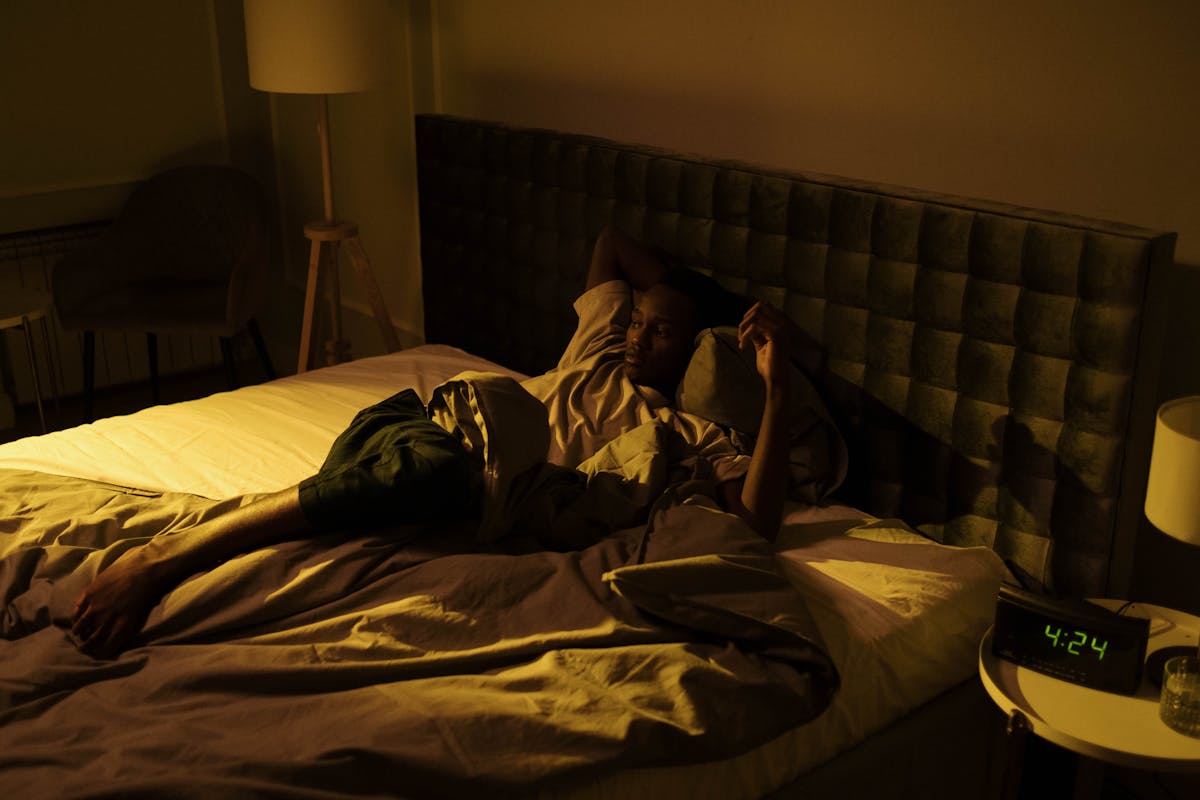
Why Do I Wake Up at 3AM? Decode Your Nocturnal Wake-Up
TL;DR
- 3am wake-ups are rarely random—they're driven by cortisol spikes, hypoglycemia (blood sugar crash), anxiety, or alcohol metabolism
- Cortisol surge (the most common culprit): your body's circadian rhythm naturally raises cortisol 2–3 hours before wake time; stress amplifies it
- Blood sugar drop: skipping dinner carbs or evening alcohol drops blood glucose, triggering a 3–4am jolt as adrenaline tries to stabilize it
- Anxiety loop: worry about sleep breeds middle-of-the-night rumination (the "anxiety: time for my one-woman show" meme is real)
- Alcohol's delayed sabotage: even 1–2 drinks suppress deep sleep and trigger wakefulness 3–4 hours post-drink
- The fix: identify YOUR trigger, then address the root (cortisol management, balanced carbs, anxiety techniques, alcohol timing)
What's Actually Happening at 3AM
Your body doesn't wake randomly. The 3am slot is surprisingly consistent because it maps to your circadian biology. Most people cycle through 90-minute sleep stages (NREM 1/2/3 → REM → repeat). Around 3–4am, you're in your shallowest REM phases, so a physiological trigger that wouldn't wake you at 11pm will jolt you awake now.
The trigger itself? Almost always one of four.
The 4 Culprits Behind 3AM Wake-Ups
1. Cortisol Surge (Most Common)
Your adrenal gland naturally ramps up cortisol 2–3 hours before your normal wake time (this is healthy and expected). But chronic stress amplifies this spike—turning a subtle shift into an abrupt jolt.
How it feels: You snap awake, suddenly alert (often with a racing heart or adrenaline flash). You're not groggy; you're wired. Within minutes your brain is already reviewing your to-do list or that awkward email from three weeks ago.
Why 3am specifically: If you wake at 6–7am normally, the cortisol peak hits around 3–4am. Your circadian rhythm is stupidly precise.
Quick diagnostic: Do you wake up the same time most nights, regardless of when you fell asleep? Cortisol. Does it happen on high-stress nights more often? Definitely cortisol.
What to do:
- Manage afternoon stress (walks, deep breathing, limiting caffeine after 2pm)
- Avoid "doomscrolling" before bed (your cortisol reads "threat" and stays elevated)
- Consider magnesium glycinate or L-theanine 1–2 hours before bed (both reduce cortisol without sedation)
- If severe, a healthcare provider can test cortisol curves to rule out adrenal dysfunction
2. Blood Sugar Crash (Hypoglycemia)
If your dinner was light, low-carb, or alcohol-heavy without food, your blood glucose dips overnight. Around 3–4am, your liver glycogen runs low, and adrenaline surges to raise blood sugar—waking you up in the process.
How it feels: You wake up hungry, sweaty, or with a tremor. Sometimes heart palpitations. It's different from cortisol's mental alertness; this is physical anxiety from your body saying "I need glucose now."
The alcohol + sugar combo: This is brutal. Alcohol metabolizes as sugar initially (blood sugar spike → insulin rush → crash 3 hours later). Skip the carbs with that evening drink, and you're setting yourself up for a 3am hypoglycemic wake-up.
Quick diagnostic: Do you wake hungry or shaky? Ever noticed it's worse on nights you skipped dinner carbs or drank without eating? Blood sugar.
What to do:
- Eat a balanced dinner with protein, fat, and complex carbs (rice, oats, sweet potato stabilize overnight glucose)
- If you drink alcohol, have food with it—ideally protein and a starch
- Keep a small snack by your bed (a handful of nuts, a banana) for nights you know dinner was light
- Consider a tiny carb-forward snack 30 min before bed (toast with almond butter) if you're a chronic 3am waker
3. Anxiety & Rumination (The Wired Loop)
Anxiety doesn't wait for 3am to strike—but your brain's defenses are lowest then. The combination of shallow sleep + cortisol + a quiet dark room = suddenly your brain's worst thoughts have center stage.
How it feels: You wake and immediately start problem-solving, worrying, or replaying the day. It's not that you're woken by a sound or physical sensation; you wake into already thinking.
Why 3am is the anxiety sweet spot: Melatonin (your sleep hormone) is fading but cortisol hasn't fully risen yet—it's the most psychologically vulnerable window. Plus, the deep silence of 3am amplifies internal noise (your heartbeat, that weird sound outside, your spiral of doom).
The Reddit/TikTok truth: "Lie awake at 3am doing math in my head" (financial anxiety) and "anxiety: time for my one-woman show" (internal monologue on overdrive) are the most-shared 3am experiences online.
Quick diagnostic: Does the wake-up feel mental more than physical? Can you not fall back asleep because your brain is on? Is it worse during stressful periods (deadlines, relationship drama, life changes)? Anxiety.
What to do:
- Pre-emptive: Limit anxiety triggers before bed (news, stressful conversations, work email). Your amygdala remembers.
- In the moment: Try 4-7-8 breathing (inhale 4, hold 7, exhale 8) to flip your nervous system to parasympathetic
- Cognitive diffusion: Notice the worry like a cloud passing ("that's anxiety talking, not truth") rather than engaging with it
- If it's chronic: consider therapy (CBT for insomnia is gold standard) or a provider evaluation for generalized anxiety
- Supplements: Ashwagandha (reduces cortisol), L-theanine, or magnesium can soften the edge
4. Alcohol Metabolism (The Delayed Saboteur)
Alcohol is a sedative—it knocks you out. But 3–4 hours in, your body metabolizes it, and the rebound effect suppresses REM sleep and triggers wakefulness. Even 1–2 drinks do this.
How it feels: You fall asleep easily (alcohol's honeymoon phase), but wake around 3am and cannot fall back asleep. Your mind might race, or you might just lie there acutely aware. No physical symptoms necessarily, just... alert.
Why alcohol is especially sneaky: You think the drinking helped (you fell asleep faster), so you don't connect it to the 3am wake. But the trade-off is real: less deep sleep, more fragmented REM, and a 3am rebound wake.
Quick diagnostic: Does it happen on nights you drank, even moderately? Do you fall asleep quickly but can't return to sleep? Alcohol.
What to do:
- Timing: Stop drinking at least 3–4 hours before bed (gives your liver time to clear it)
- Moderation: One drink might pass; two+ almost guarantees disruption
- No "sleep aid" mindset: alcohol is not a sleep aid; it's a short-term knockout with a 3–4 hour relapse
- Hydration: alcohol dehydrates; alternate each drink with water
- Carbs with alcohol: food slows absorption and stabilizes blood sugar (reducing the crash)
How to Pinpoint YOUR 3AM Trigger (The Quiz Angle)
Start here—track for 1 week:
- Time: Note when you wake (is it consistently 3:15am or variable?)
- Feel: Wired/alert? Hungry/shaky? Anxious/overthinking? Groggy/hard to wake?
- Context: What did you eat/drink? Stress level? Sleep quality before the wake?
- Recovery: How fast do you fall back asleep? Instantly (alcohol) or stay awake 1+ hour (anxiety/cortisol)?
Quick self-diagnostic:
- Consistent time, wired feeling, racing thoughts → Cortisol
- Hungry, shaky, tremor, sweaty → Blood sugar
- Anxious, ruminating, can't shut off brain → Anxiety (with or without cortisol overlap)
- After drinking, alert + can't re-sleep → Alcohol
- Multiple of the above → likely a combination (most common)
Take the quiz to identify which of these is your primary driver—and get personalized strategies for each.
FAQ: 3AM Wake-Ups, Answered
Why do I always wake up at 3AM and not any other time?
Your circadian rhythm is controlling your cortisol peak, which naturally lands 2–3 hours before your typical wake time. This is normal biology. The problem isn't the 3am slot itself—it's why you're waking at that peak. Cortisol should be a subtle rise; stress, poor sleep setup, or blood sugar crashes amplify it into an actual jolt.
Is waking at 3AM every night a sign of something serious?
Occasional 3am wake-ups are universal. Every night? That's your body signaling something: stress (cortisol), dietary imbalance (blood sugar), anxiety, or alcohol use. It's rarely a "serious medical condition" but it's worth investigating—chronic fragmented sleep erodes health over time. If it persists beyond 2 weeks despite lifestyle changes, a sleep doctor can order a sleep study or cortisol test.
Can anxiety alone cause 3AM wake-ups?
Absolutely. Anxiety elevates cortisol and adrenaline, which trigger wakefulness. The anxiety itself acts as a "threat alert" that primes you to wake at the shallowest sleep point (around 3am). Chronic anxiety + poor sleep hygiene = nightly 3am clubs. This is one of the strongest cases for CBT-I (cognitive behavioral therapy for insomnia) or anxiety treatment.
Does everyone's cortisol peak at 3AM?
No. Cortisol peaks 2–3 hours before your normal wake time. If you wake at 6am, it's ~3–4am. If you wake at 9am, it's ~6–7am. This is normal; the problem is overshooting due to stress. Your goal is to smooth the curve, not eliminate it.
What's the fastest way to fall back asleep after a 3AM wake-up?
Depends on the trigger: If cortisol/anxiety, breathwork (4-7-8) and mental diffusion work best. If blood sugar, a small carb snack (banana, crackers) in 10 min. If alcohol, hydration + time (your liver needs 30–60 min more to clear it). Avoid checking your phone (blue light and the dopamine spike keep you wired). Stay in bed, keep the room cool and dark, and let your body's natural sleep pressure rebuild.
Is cortisol testing worth it if I'm waking at 3AM?
Maybe. A 24-hour cortisol test or 4-point saliva cortisol curve (morning, noon, evening, night) can show if your cortisol is abnormally elevated or dysregulated. But most 3am wakers don't have adrenal disease—they have stress or poor sleep hygiene. Start with lifestyle fixes (stress management, sleep setup, diet). If those don't work in 4 weeks, then test.
Can I fix 3AM wake-ups without supplements or medication?
Yes, often. Cortisol-driven? Stress management (walks, meditation, less screen time, boundary-setting) works. Blood sugar? Eat balanced meals with carbs. Anxiety? Therapy + sleep-friendly habits. Alcohol? Stop drinking 4 hours before bed. Most 3am issues are behavioral before they're biochemical. Start there.
The Bottom Line
Your 3am wake-up isn't a sleep bug—it's a signal. Your body is trying to tell you something: you're stressed, your blood sugar is unstable, your anxiety is running the show, or your alcohol timing is off.
The good news: Once you know the trigger, it's fixable.
Take the quiz to identify your specific 3am pattern, and get a personalized sleep-fix protocol—no guessing.
Note: This article is a self-reflection tool to help you understand your sleep patterns, not medical advice. If you have persistent sleep disruption despite lifestyle changes, or suspect a sleep disorder, consult a healthcare provider or sleep specialist.
Want a personalized read on this? Decode Your 3AM Wake-Up — a few minutes, instant results.
Related Articles

Why Am I Always Bloated? 9 Common Causes (and How to Find Yours)
If you're bloated by mid-afternoon every single day, it's usually not 'just what you ate.' Here are the 9 real causes of chronic bloating and how to pinpoint yours.
Am I Sleep Deprived: 5 Hidden Signs You're Running on Empty
You sleep 8 hours and wake exhausted. Your brain feels foggy. You're snapping at people. These aren't laziness—they're signs your body is running a sleep debt you probably don't realize.

Am I Tired All the Time? Why You're Exhausted and How to Know If It's Your Hormones
You sleep 8 hours and wake up feeling like you got hit by a truck. Here's what's actually going on—and how to tell if it's your hormones, stress, or something else.