
What Makes a Good Dating Profile: 5 Evidence-Backed Elements That Drive Matches
Jordan Ellis, LMFT
6/28/2026
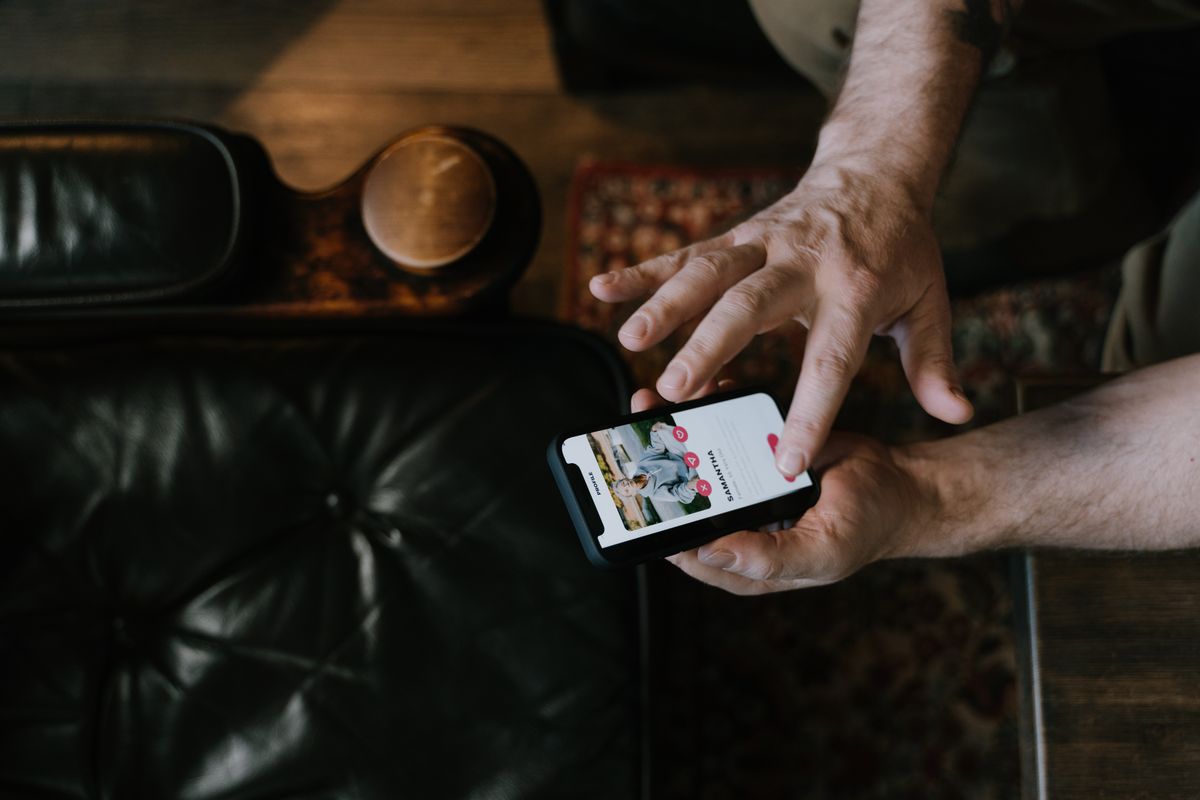
What Makes a Good Dating Profile: 5 Evidence-Backed Elements That Drive Matches
TL;DR
- Your first photo is make-or-break—it determines if anyone sees the rest (not your face, your framing)
- Profile consistency matters: don't be one person in photo 1 and someone else in photo 3
- The "about me" isn't a resume—it's permission to imagine a conversation with you
- Specificity outranks generic positivity ("love hiking" ranks lower than "spent 3 months on the Appalachian Trail")
- The data gap: women get 1 match per 10 swipes; men average 1 per 130–140. Optimization moves that needle
Why Dating Profiles Fail (And It's Probably Fixable)
Take the pressure off: your dating profile isn't failing because you're unattractive. The r/hingeapp roast culture—where redditors brutally dissect profiles—reveals a pattern: the most common rejections aren't "you're ugly." They're fixable things. "Your first photo gives me catfish energy." "You look like 2 different people in your photos." "I can't tell if you're serious about this or joking."
The psychology is simple: a dating app user swipes at 0.3-second intervals. Your first photo is the only thing that's even seen. If it doesn't pass that reflex test, nobody reads your bio. It's not about being model-tier—it's about clarity.
Here's what moves the dial:
Element 1: A First Photo That Wins the 0.3-Second Test
The OkCupid data analysis—which found that women rate 80% of men as below-average in attractiveness—isn't about faces. It's about first-impression curation. A woman who's swiping will tap or pass in under half a second, based purely on that lead photo.
What works:
- Face-forward, well-lit, smiling or genuine expression. No group photos, hats, sunglasses, or distance shots. The swiper needs to see you, clearly, to your shoulders.
- Avoid the intensity mismatch. An unsmiling, ultra-serious photo on Hinge (known for genuine-looking faces) reads as "not here to enjoy this." Bumble + Tinder lean casual; Hinge leans warm. Calibrate.
- Not a mirror selfie. A photo taken by someone else (or using a remote) reads as more intentional. Mirror selfies are the universal tell for "I don't have friends to take photos."
- Avoid angles that hide or distort your face. Extreme up-shots, side-angle shots, or photos where you're turned away don't let the swiper know you. The goal is instant recognition—"yes, that's your vibe" or "no, not for me"—not confusion.
The r/hingeapp feedback is clear: women say "Your first photo makes it impossible to know if I'd find you attractive" far more often than "I'm not attracted to you." The first photo's job is clarity, not seduction.
Element 2: Photo Consistency (No Catfishing)
Once someone passes the first photo, they binge the rest. And they're comparing. If photo 1 is a clean headshot and photo 3 is you 40 pounds heavier, 15 years older, or in a completely different vibe, it reads as catfish. That kills trust instantly.
What works:
- 2–3 recent photos that show range but feel like the same person. Headshot, waist-up casual, full-body doing something. All taken within the last year or so.
- Vary the context but not the core vibe. If photo 1 is you at a wedding looking sharp, photo 2 can be you climbing a rock wall—different energy, but clearly you.
- Avoid heavy filters, extreme angles, or photo-to-photo inconsistency in grooming. One photo clean-shaven, the next bearded, the next with a buzz cut = user can't predict what they're getting.
The single most-cited turn-off from roasts: "You look like 2 different people. It's a classic catfish I'd never swipe right." Consistency kills that fear.
Element 3: A Bio That Invites Conversation, Not a Resume
The "about me" on a dating app isn't LinkedIn. It's not a list of achievements. It's a permission to imagine talking to you.
Bad bios sound like this:
- "I love traveling, hiking, dogs, and good coffee" (could describe 70% of the app)
- "Successful professional. Looking for something serious." (sterile, gives nothing to grab onto)
- "Just ask me" (lazy, makes the other person do all the work)
Good bios sound like this:
- "I trained for a half-marathon I didn't finish, then ate pizza in the park instead. No regrets." (specific, shows self-awareness, invites teasing)
- "Spent last summer relearning guitar. Currently 3 chords away from being impressive." (shows progress, humor, vulnerability)
- "I ask weird questions on first dates (like, what's your most controversial food opinion?) because small talk is boring." (signals what a conversation with you is actually like)
What works:
- Specificity: Not "love travel," but "backpacked Southeast Asia for 4 months and would do it again." Not "fitness enthusiast," but "runs a lot and occasionally talks about my running times unsolicited."
- Vulnerability + humor: Show one thing you're not great at, or an embarrassing quirk. It makes you human and relatable.
- Conversation bait: End with something that invites a response. "Ask me about the time I got lost hiking" is an open door. "Looking for someone serious" is a dead end.
- Tone should match the app. Hinge (relationship-focused) = slightly warmer, slightly more earnest. Bumble (fun, social) = lighter, punchier. Tinder (low-commitment) = can be joke-heavier.
The goal isn't to describe yourself. It's to give someone a glimpse of what it's like to be around you.
Element 4: Specificity Over Generic Positivity
This is subtle, but it moves the needle. Compare:
- "I'm a kind person who values authenticity and honesty." (generic, could be anyone's profile)
- "I volunteer at an animal shelter and am genuinely bad at lying, which either makes me refreshingly honest or annoyingly blunt depending on the day." (specific, has texture)
The data here is indirect, but the psychology is clear: generic traits don't differentiate. If everyone says "I'm kind" and "I like authenticity," that information does nothing. Specific details—hobbies, habits, quirks, weird standards—are what people remember and feel connected to.
What works:
- Name specific hobbies or passions, not just categories. Not "love sports," but "have watched every NFL playoff game for the last 5 years and will absolutely yell at the TV."
- Add context to interests. Not "reading," but "spent 3 months reading every Stephen King book in order and regret nothing."
- Include one oddball detail. "I have a strong opinion about the correct way to load a dishwasher" or "I collect vintage hiking maps" gives someone something to latch onto in conversation.
Specificity doesn't just help you stand out—it acts as a filter. Someone who reads your weird detail and thinks "ugh, that's annoying" is someone you don't want anyway. The right match will read "strong opinions about dishwasher loading" and text you about it on date 1.
Element 5: The Prompt or Hook That Suggests What a Date With You Is Like
On apps like Hinge, you get 3 open-ended prompts. On Bumble, there's space for a tagline. Use this real estate to signal what the experience of spending time with you is like.
Bad prompts:
- "My perfect weekend is..." "I'm looking for someone who..." (These are defaults that don't differentiate.)
- Long essays that sound like therapy or a confession
- Anything that sounds like you're performing or being someone you're not
Good prompts:
- "The weirdest thing in my apartment is..." (Invites someone into your space, signals humor/personality)
- "I'll never understand why..." (Lets you have a weird opinion without judgment, invites debate)
- "My ideal date would involve..." (But be specific: not "something fun," but "getting completely lost in a neighborhood I've never been to and finding a random taco stand")
The goal: make someone think, "A date with this person would be interesting."
FAQ: Real Questions People Ask About Dating Profiles
Why don't I get matches even with good photos?
Matches depend on visibility + appeal. A great photo helps appeal, but visibility depends on the app's algorithm. Hinge surfaces recent profiles and active users more; Tinder prioritizes engagement. If you're not getting any matches after optimizing photos + bio, it might be algorithm or your demographic on that particular app. Try a different app. The data supports this: women get higher match rates universally, but men's match rates vary wildly by app choice.
How many photos should I have?
2–3 high-quality, recent photos of you where you're clearly recognizable. More than that is noise; less than that feels like you're hiding something. Each photo should answer "what do I look like from this angle?" or "what do I do for fun?" No photo should repeat the previous one's angle or context.
Should I put my Instagram handle in my bio?
Only if it's recent and high-quality. If your Instagram is 6 months old or full of party photos when your dating profile says "looking for something serious," you've just flagged an inconsistency. Keep the dating profile self-contained.
What should I say about what I'm looking for?
Short version: specific > generic. Not "looking for someone kind and genuine," but "looking for someone who'd actually finish that conversation I started about why pineapple on pizza is chaos." Be honest about your intention (casual vs. serious) so you attract the right people. But phrase it through what you enjoy, not as a checklist of requirements.
How do I know if my profile is actually good?
You don't, until you test it. But red flags: if your first photo is grainy, far away, or has someone else in it, replace it. If your bio is generic enough that it could apply to half the app, add specificity. If someone looking at your profile can't picture what a conversation with you would feel like, rewrite it. Use the dating profile grader quiz to get instant feedback—it scores on the exact elements that move matches.
The Bottom Line: It's Not Your Face, It's Your Frame
The 80/20 rule in dating isn't about looks. It's about curation. Women, on average, see higher match rates because they're more selective (1 in 10 vs. 1 in 130), which means they optimize harder. The men who close that gap aren't necessarily more attractive—they've optimized the five elements above: clear first photo, consistency, a bio that signals personality, specificity, and a prompt that makes someone curious.
Your dating profile is an invitation. The 0.3-second swipe is just the knock on the door. What matters is whether someone wants to open it—and that comes down to clarity, personality, and giving them something specific to grab onto.
Not sure if your profile is hitting these marks? Take the dating profile grader quiz to see exactly what's working and what could move the needle on your next app refresh.
Want a personalized read on this? Grade Your Dating Profile — a few minutes, instant results.
Related Articles
Your Dating Profile Is Quietly Repelling Great Matches—Here’s the 8-Part Fix (Backed by Science)
Most profiles fail for predictable reasons: weak first impression, vague bio, and zero conversation hooks. Here’s the science—and the fix.
Your Dating Profile Is Being Judged in 0.1 Seconds—Fix These 7 Things (Then Grade It)
Most profiles fail for predictable reasons: the wrong first photo, vague prompts, tiny “trust leaks,” and avoidable text mistakes. Here’s how to fix yours—fast.

Why Your Dating Profile Isn’t Getting Matches (And the 8 Signals Apps Actually Rank You On)
Your dating profile is being judged by invisible rules. Learn the psychology behind swipes and how to optimize the 8 traits that matter most.