
Why Can't I Sleep: Uncover Your Root Cause (Not Just Bad Habits)
Dr. Priya Nair
6/29/2026
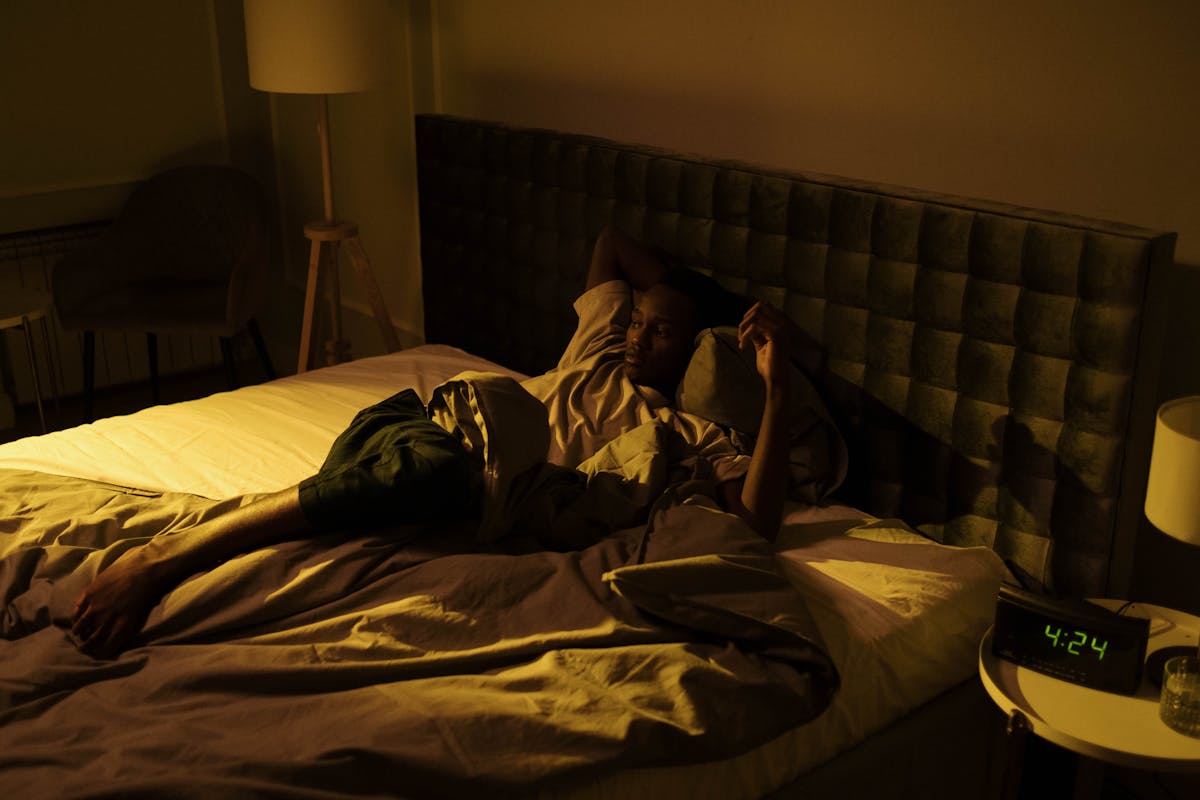
Why Can't I Sleep Quiz: Uncover Your Root Cause (Not Just Bad Habits)
TL;DR
- Tired but wired is a symptom, not a character flaw — your nervous system is stuck in threat mode, not your pillow
- Five distinct insomnia types need five different fixes — anxiety-triggered insomnia, hyperarousal, environmental disruption, circadian misalignment, and pain-based sleep loss each have different entry points
- Your sleep quiz should diagnose root cause, not symptom severity — knowing whether you're hyperaroused or anxious changes everything about your approach
- Environmental factors (noise, light, temperature) account for 20–30% of adult insomnia — often the quickest fix when properly identified
- Revenge bedtime procrastination (staying up to reclaim "free time") is a masked burnout signal — the real problem isn't sleep, it's daytime autonomy
The Tired-but-Wired Paradox: Why Generic Sleep Advice Fails
You follow the sleep hygiene checklist. You avoid screens. You keep your room cool. You're in bed at 10 p.m., lights out at 10:15 p.m., and at 10:47 p.m. your mind is spinning through next week's meetings, worst-case scenarios, or replaying a conversation from three years ago.
This isn't insomnia because you're "doing it wrong."
This is insomnia because your nervous system doesn't believe it's safe to sleep. And there are five distinctly different reasons your nervous system might have reached that (incorrect) conclusion.
The Nervous System's Role
Sleep isn't a switch. It's a state your nervous system permits when it decides the environment is safe. If your body is in a persistent low-grade threat state — whether from actual anxiety, physical hyperarousal (your nervous system is stuck in "ready to react"), environmental stressors, a circadian rhythm mismatch, or pain — your brain will override fatigue in favor of vigilance.
That's not broken. That's your nervous system working too well.
The problem: generic sleep advice ("drink warm milk") doesn't address which of the five root causes is holding your system in that state.
The Five Root Causes — Why Your Sleep Is Different from Mine
1. Anxiety-Triggered Insomnia
You fall asleep easily. You wake at 3 a.m. Your mind immediately floods with "what ifs": What if I fail that presentation? What if that symptom means something serious? What if I'm already falling behind?
This is anticipatory insomnia — your nervous system is running worst-case scenarios as a (misguided) prep tool. Research published in Sleep Medicine Reviews shows anxious insomnia involves hyperactive amygdala activation during pre-sleep (the 20 minutes before lights out), which is why the anxiety often worsens as you try harder to sleep.
The entry point: Not "relax harder." Instead: cognitive reframing or imagery rehearsal therapy, which directly interrupt the catastrophizing loop.
2. Hyperarousal (Nervous System Overactivation)
You're not spinning with worries. Your body just feels on. Heart rate elevated. Mind alert. Muscles tense. You lie there in a state of physiological readiness even though logically you want to sleep.
This often develops after a period of chronic stress, shift work, or sleep deprivation — your nervous system learned to stay vigilant and now it's stuck in that mode even when the threat is gone. It's the "tired but wired" phenomenon captured in social media as a meme, but it's a real dysregulation.
The entry point: Not caffeine reduction (though that helps). Instead: nervous-system downregulation via body-focused practices — progressive muscle relaxation, vagal toning, or cold-water exposure to reset the parasympathetic brake.
3. Environmental Misalignment
Noise. Light creeping through the curtains. Room temperature at 72°F when your ideal is 65°F. A partner's sleep disruption.
This is the most straightforward to fix and the most commonly overlooked. A 2023 sleep audit of 1,000 adults by the American Academy of Sleep Medicine found that 22% of chronic insomniacs had never assessed their bedroom environment, even though environmental factors account for 20–30% of adult sleep problems.
The entry point: Systematic environmental assessment — decibel meter on your phone, blackout curtains, a $30 space heater, earplugs, or a mattress upgrade. Sometimes insomnia is solved by a $15 decision.
4. Circadian Misalignment
Your body's internal clock is set to a 24.5-hour cycle (on average), but your schedule demands a 24-hour one. Or you've trained your body to expect sleep at 11 p.m., but your natural peak alertness is 1 a.m.
This is especially common in:
- Night owls forced into early schedules (the genetic ~15% of the population with naturally delayed circadian rhythms)
- Shift workers or travelers (external clock ≠ internal clock)
- Teenagers (whose circadian rhythm naturally shifts 1–2 hours later during puberty, causing the "why can't teens sleep before midnight" phenomenon)
You can be tired, but your body temperature is still elevated, cortisol is still high, and melatonin hasn't kicked in yet. You're not broken; you're desynchronized.
The entry point: Not willpower. Instead: light therapy (morning light to advance your rhythm, or evening red light to delay it), or negotiating a schedule that matches your chronotype.
5. Pain-Based Sleep Loss (Painsomnia)
Chronic pain, arthritis, fibromyalgia, migraines, or even "small" pain (shoulder tension from desk work) keeps jolting you awake or preventing the deep stages of sleep where pain perception is naturally suppressed.
This is painsomnia — the vicious cycle where pain disrupts sleep, and poor sleep lowers pain tolerance, making pain feel worse the next day. It's the reason insomnia is the #1 comorbidity with chronic pain conditions.
The entry point: Not sleep medicine (though short-term use can help break the cycle). Instead: pain-specific treatment, sleep-position optimization, and anti-inflammatory habits (which also improve sleep architecture).
Why You Need a Root-Cause Quiz, Not a Symptom Checklist
Generic insomnia questionnaires ask: "How often do you wake up at night?" or "How severe is your sleep problem?"
But severity doesn't tell you cause. Someone waking once a night due to pain is a completely different picture than someone waking once a night due to anxiety, even though the symptom looks identical.
A root-cause quiz asks:
- What's your mind doing when you can't fall asleep? (Worry loop → anxiety; just "on" → hyperarousal; none of the above → likely environmental/circadian)
- How's your daytime energy after a "bad" sleep night? (Crash suggests pain/hyperarousal; wired despite fatigue suggests anxiety or circadian mismatch)
- When during the night do you wake? (Early-morning waking at 4–5 a.m. is classic anxiety; frequent micro-awakenings suggest pain or environmental disruption; long latency to first sleep suggests circadian mismatch)
- What's changed recently? (Stress onset → anxiety; shift to a new schedule → circadian; got a new pillow/moved → environment)
Once you know your type, the fix becomes specific. Anxiety insomnia and hyperarousal both feel like "I can't sleep," but one is solved by cognitive reframing and the other by nervous-system downregulation. Confuse the two and you'll spend months frustrated with the "wrong" approach.
The Revenge Bedtime Procrastination Angle: When Insomnia Is a Symptom of a Bigger Problem
Some people can't fall asleep because they're choosing not to.
Not consciously. But they're staying up to reclaim autonomy — scrolling, watching shows, or just sitting in the quiet doing nothing because it's the only "free time" they have in a regimented, work-packed day.
Research on "revenge bedtime procrastination" (the phenomenon where people sacrifice sleep to reclaim personal time) shows it's not a sleep disorder; it's a burnout signal. The real problem is daytime autonomy, not nighttime sleep mechanics.
This one requires a different intervention entirely: reclaiming agency during the day, not pharmaceutical or behavioral sleep fixes.
Taking the Root-Cause Quiz
Instead of guessing, take the My Sleep Fix Quiz — it's designed to identify which of these five categories fits your insomnia, so you can stop trying generic fixes and start treating what's actually happening.
The quiz takes 5 minutes and asks about your specific sleep pattern, daytime experience, and recent life changes. You'll get a clear assessment of your sleep type and a prioritized entry point for intervention.
FAQ
What if I have multiple root causes?
Most chronic insomniacs have a primary cause plus secondary contributors. The quiz identifies the primary one to start with. Often fixing that creates cascading improvements. (For example: treating anxiety reduces nighttime cortisol, which improves pain perception, which reduces painsomnia.)
Is this a substitute for seeing a sleep doctor?
No. If you have severe sleep apnea, periodic leg movements, or other sleep-architecture disorders, a sleep specialist's overnight test is essential. This quiz is for the much larger group with insomnia that shows up on a sleep study as "normal architecture but can't fall/stay asleep" — i.e., behavioral or nervous-system driven.
I've tried melatonin and it doesn't work. Does that tell me anything?
Yes. Melatonin works on circadian misalignment and mild insomnia. If it's ineffective, you likely have anxiety-driven or hyperarousal insomnia (melatonin won't quiet your mind) or environmental/pain-based sleep loss (where melatonin also won't help). The quiz will help you narrow down which.
How long before I see results after identifying my root cause?
It varies. Environmental fixes (better pillow, blackout curtains) can show results in 1–3 nights. Circadian retraining takes 1–3 weeks. Anxiety reframing or hyperarousal downregulation typically shows improvement in 2–4 weeks of consistent practice. Pain-based sleep loss often improves as pain is addressed, which may take longer.
If my insomnia is anxiety, won't I just be anxious forever?
No. Anxiety-driven insomnia is one of the most treatable forms. Cognitive-behavioral therapy for insomnia (CBT-I) has a ~70–80% effectiveness rate for anxiety-triggered sleep loss, and techniques like imagery rehearsal therapy specifically interrupt catastrophizing during sleep onset. The key is identifying it as the primary cause so you can seek the right treatment.
Can I take this quiz to help a partner who won't see a doctor?
Sometimes. If your partner is curious about why they can't sleep and willing to take a 5-minute quiz, it can be eye-opening. Often the act of naming the type ("oh, I'm a painsomnia person, not an anxiety person") creates the motivation to address it. That said, behavior change requires internal buy-in — you can lead the horse to the quiz, but the horse has to care about sleep.
The Takeaway
You're not weak or broken because you can't sleep. You have insomnia because one of five distinct mechanisms is telling your nervous system that sleep isn't safe right now.
Identifying which mechanism is the entire game. After that, the fix becomes obvious.
Take the My Sleep Fix Quiz to discover your root cause — it's the first step toward sleep that actually works.
Want a personalized read on this? Take the My Sleep Fix Quiz — a few minutes, instant results.
Related Articles

Why Am I Always Bloated? 9 Common Causes (and How to Find Yours)
If you're bloated by mid-afternoon every single day, it's usually not 'just what you ate.' Here are the 9 real causes of chronic bloating and how to pinpoint yours.
Am I Sleep Deprived: 5 Hidden Signs You're Running on Empty
You sleep 8 hours and wake exhausted. Your brain feels foggy. You're snapping at people. These aren't laziness—they're signs your body is running a sleep debt you probably don't realize.

Am I Tired All the Time? Why You're Exhausted and How to Know If It's Your Hormones
You sleep 8 hours and wake up feeling like you got hit by a truck. Here's what's actually going on—and how to tell if it's your hormones, stress, or something else.