
Am I Attractive or Average? The Comparison Trap & Self-Perception Bias
Tara Lindqvist
6/7/2026

Am I Attractive or Average? The Comparison Trap & Self-Perception Bias
TL;DR
- Most people rate themselves lower than others rate them (the mirror-vs-photo gap).
- Social media creates a false "average" that skews self-perception downward.
- Attractiveness depends more on confidence, grooming, and angles than raw features.
- The belief that attractiveness is fixed drives anxiety; the truth is it's contextual and learnable.
- Our appearance-confidence quiz helps you separate objective feedback from distorted self-talk.
What Does "Attractive" Actually Mean?
You're beautiful in person, but your selfie looks "mid." Your friend says you're gorgeous; your mirror says average. So which is it?
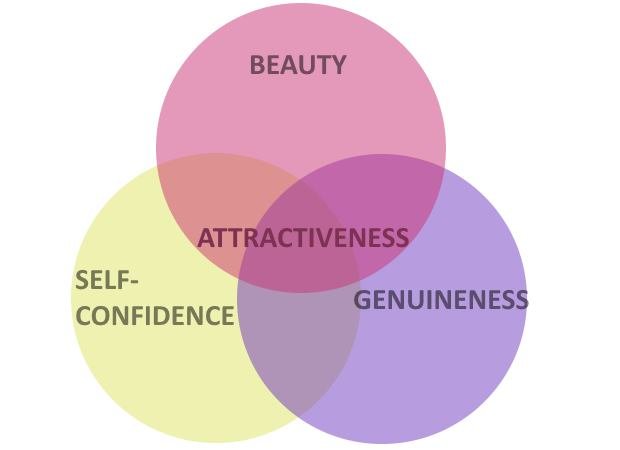
The short answer: attractiveness is not a number. It's the intersection of features, presentation, context, and how much the person looking cares. This is why the same person can feel attractive at a night out and invisible at a grocery store—the conditions changed, not the face.
When people ask "am I attractive or average," what they're really asking is: "Do I have permission to feel confident, or should I accept that I'm unremarkable?" That's a question worth untangling—because the answer is almost always skewed.
The Mirror Problem: Why You're Your Own Harshest Judge
People consistently rate themselves lower in attractiveness than others rate them. This gap is especially pronounced among those navigating online dating and comparison-heavy social media.
Why?
The mirror is a lie. A mirror shows a flipped, static image under controlled light. You see yourself from one angle thousands of times; your brain has built a hyper-detailed map of every perceived flaw. Real people see you from multiple angles, moving, in natural light, for a few seconds. They don't see the insecurity you're carrying into the frame.
Photos feel worse than mirrors, mirrors feel worse than real life. The research on the "rate my dating profile" phenomenon (especially on r/hingeapp) is clear: everyone knows their photos don't capture how they actually look. The first photo especially determines whether someone swipes—and the person with a blurry, unflattering first photo loses, even if they're conventionally attractive in person.
You're comparing yourself to a curated highlight reel. Social media has rewritten what "average" looks like. The average person on Instagram is not the average person; it's the 1% who took 47 photos, edited 8, and posted the one that got the most likes. You're comparing your unfiltered morning self to someone's best angle in golden hour, edited in VSCO. The psychological toll of this comparison erodes confidence more than genetics ever could.
The Confidence Paradox: Attractiveness Is Mostly Presentation
Looksmaxxing culture got one thing right: how you show up matters far more than your raw features.
A person with an "average" face who has clear skin, a sharp haircut, dresses intentionally, holds eye contact, and moves with ease reads as significantly more attractive than someone with conventionally beautiful features who slouches, avoids mirrors, and apologizes for existing.
This isn't fake confidence. It's the feedback loop between self-respect and how others perceive you. When you invest consistently in grooming, presentation, and moving through the world like you belong there, other people respond to that signal.
The OkCupid statistic that "80% of men are rated below-average in attractiveness by women" is often cited as proof dating is stacked. But that comes from a rating study, not real behavior. In actual dating apps, profile quality (good lighting, genuine smile, one clear headshot) outperforms raw face-based attractiveness every time. The person with mediocre features and an excellent profile beats someone conventionally attractive but lit from below with a blurry group photo.
Why "Am I Average?" Is the Wrong Question
The question assumes attractiveness is a fixed trait on a 1–10 scale. It isn't.
You might be:
- Attractive to your person, average to a stranger
- Invisible in a crowd, magnetic one-on-one
- Transformed by age, context, presentation, confidence
The anxiety underneath is real: "Will I be chosen? Do I belong?" That's worth addressing. But the answer doesn't come from a rating—it comes from distinguishing objective feedback from distorted self-talk. Do people consistently compliment your smile, your style, your presence? That's real. Do you feel invisible and apologetic about your appearance? That might be comparison brain or past rejection, not reality.
This is exactly what our appearance-confidence quiz addresses: cutting through the distortion to show you how you actually show up, not how the mirror makes you feel.
The Looksmaxxing Trap
Looksmaxxing culture offers something seductive: a system. If you isolate the "right" features and optimize them, maybe you can buy your way out of the anxiety.
Some optimization is healthy—a good haircut, skincare, clothes that fit. These boost confidence legitimately.
But looksmaxxing often becomes a dopamine treadmill: fix one thing, spot the next "flaw," repeat endlessly. And here's the reality: the person you're comparing yourself to probably isn't naturally that attractive—they just have better lighting, angles, and photo confidence. You're chasing an illusion.
Research on body dysmorphia shows that pursuing appearance optimization without addressing the underlying anxiety rarely resolves the anxiety. You fix one thing, then fixate on the next. The issue was never the feature; it was the belief that your worth hinges on meeting an arbitrary external standard.
What Actually Matters
Most things that shift how attractive you appear are learnable:
-
Grooming: A $15 haircut every 6 weeks, basic skincare, clean nails. These transform how you look more than genetics.
-
Clothing fit: Wear things that fit your body now. One well-fitting shirt beats five expensive, baggy ones.
-
Posture and presence: Shoulders back, eye contact, taking up space. This alone shifts perceived attractiveness.
-
Lighting and angles: If you feel invisible in photos but attractive in person, it's 90% the photo. Learn your three angles. Golden hour. One good headshot beats twenty mediocre group photos.
-
Context: You're not trying to be attractive to everyone—just to your person, or to feel confident in your own skin.
Breaking the Comparison Loop
Replace the wrong question. Instead of "Am I attractive?", ask:
- "Do I feel good in my body today?"
- "Am I presenting myself the way I want to be seen?"
- "Do people I trust think I'm attractive?" (Usually yes.)
Get external feedback. Ask one trusted person: "What do you notice about how I show up?" Not "Am I pretty?"—that filters through politeness. You might hear "You light up when you talk" or "You have killer style." That matters far more than a mirror rating.
Audit your media diet. Heavily curated aesthetics set a fake baseline. Unfollow, follow accounts of real humans being average. Your brain thrives on evidence that normal looks normal.
Invest in systems, not fixes. A therapist if appearance anxiety runs deep. A trainer if movement builds confidence. A tailor if fit is the gap. These compound; they're not one-off fixes.
FAQ
What does it mean if I rate myself lower than my friends?
You're normal. Most people are their own harshest judges. Your friends have less invested in your "flaws" and they see you moving, smiling, present—not a static mirror image. If multiple people you trust say you're attractive, they're probably right.
Is attractiveness real or just subjective?
Both. Some patterns (symmetry, clear skin, fitness markers) show up as universally attractive. But within those patterns, there's enormous variance. You can't be universally attractive. You can be attractive to your person, or to yourself—which actually matters more.
Will a quiz fix my appearance insecurity?
No quiz will fix it. But a quiz that gives honest, non-comparative feedback about how you show up—confidence, presentation, how others see you—can interrupt the distorted self-talk. It's one data point against the mirror's lie. The real work is building evidence that you're fine, and learning to show up like you believe it.
Does looksmaxxing actually work?
Minor optimizations (haircut, skincare, fit clothes) absolutely work. The "hard maxxing" stuff (surgery, extreme protocols) rarely solves the underlying anxiety. If the goal is confidence, styling and grooming get you 90% of the way at 5% of the cost.
How do I know if my appearance insecurity is normal or deeper?
Normal: occasional mirror checking, knowing your angles, wanting to look good. Concerning: hours comparing, avoiding photos, intrusive thoughts about flaws, feeling your worth hinges on looks. If the second resonates, that's worth talking to someone about. It's not about your face; it's about your relationship with your face.
If I'm average-looking, can I still be attractive?
Absolutely. Attractiveness is not a fixed rating. You can be average by symmetry and very attractive by what actually matters: presence, style, confidence, humor, kindness. When you control for grooming and confidence, the gap between "average" and "attractive" shrinks dramatically.
The Bottom Line
You probably can't objectively answer "am I attractive or average?"—and that's good. It means the answer isn't fixed by genetics; it's something you can shift. You have agency. You can change how you show up, break the comparison spiral, and build the confidence that actually makes you attractive.
Start by taking our appearance-confidence quiz. It won't rate your face. It will help you see past the distortion of the mirror and social media, and give you real clarity on what's true about how you show up in the world.
Want a personalized read on this? Take the Appearance Confidence Quiz — a few minutes, instant results.
Related Articles

You Get Compliments… So Why Do You Still Feel Insecure? The “Attractiveness Paradox” Explained
If compliments don’t make you feel better, you’re not broken—you’re stuck in a predictable psychology loop. Here’s how it works and how to fix it.
The Confidence Tax: Why Being Attractive Can Cost You Peace of Mind
When looking good becomes a responsibility instead of a benefit, confidence turns fragile. Here’s the science—and how to reclaim stable self-worth.

The Compliment Hangover: Why Praise About Your Looks Can Make You Feel Less Confident
If compliments don’t land—or they make you feel anxious—you may be stuck on the validation treadmill. Here’s what’s happening and how to break the loop.