
Spirit Animal by Birthday: Discover Your Birth-Date Animal Archetype
Noah Kim
6/26/2026
Spirit Animal by Birthday Quiz: Discover Your Birth-Date Animal Archetype
TL;DR
- Spirit animals are personality archetypes, not mystical claims—a framework for self-reflection and identity
- Your birth season influences your archetype: spring animals embody renewal and boldness, summer animals radiate warmth and energy, fall animals reflect introspection and preparation, winter animals carry stillness and resilience
- The quiz maps your birthday + personality preferences to a specific animal that resonates with how you naturally show up in the world
- Results aren't "mystical"—they're a mirror for self-recognition and a tribal identity badge to share
- Most people report their result feels "scarily accurate" because the quiz reflects authentic personality traits, not random assignment
If you've ever felt like a certain animal just gets you, you're onto something real. A spirit animal isn't about reincarnation or supernatural connection—it's an archetype, a personality mirror that names something you already sense about yourself but couldn't quite articulate.
Your birthday carries hidden personality data. The season you were born in, combined with your temperament preferences, creates a unique pattern. Spring-born people tend toward bold initiation. Summer-born folks radiate relational warmth. Fall-born individuals reflect deeply before acting. Winter-born people embody quiet resilience. Across those seasonal bands, specific animal archetypes emerge—the hawk (strategic vision), the deer (sensitive awareness), the bear (grounded strength), the raven (intuitive wisdom).
This quiz doesn't tell you what you should be. It reflects back what you already are—just with a name and an illustration that finally makes sense of the pattern.
How the Spirit Animal by Birthday Framework Works
The birthday connection isn't mystical—it's psychologically real. Birth season influences circadian rhythms, early-life social patterns, and temperament development in measurable ways. Kids born in spring grow up differently than kids born in winter, not because of destiny, but because of light, season, and early social context.
The quiz layers that seasonal template onto five core personality dimensions:
- Boldness vs. caution — how you approach risk and novelty
- Warmth vs. reserve — your relational style
- Instinct vs. reflection — whether you decide fast or slow
- Independence vs. interdependence — your social orientation
- Directness vs. subtlety — how you communicate
Combine your birthday-season baseline with these five dimensions, and specific animals emerge that embody that exact combination. A spring-born person who scores high on caution and reflection becomes an owl, not a hawk—someone with spring's renewal energy but filtered through careful thought. A summer-born person who scores high on boldness becomes a lion—all warmth and direct confidence.
That's why the result feels so accurate. You're not being assigned; you're being recognized.
The 12 Birth-Season Animal Archetypes
Spring (March 21–June 20): The Season of Initiation
Spring-born energy: visionary, bold, unafraid to be first. Spring births correlate with higher assertiveness and novelty-seeking (more light exposure in utero and infancy = higher dopamine sensitivity). Spring animals embody that initiation impulse.
- Hawk (March–April) — Strategic vision and fearless action. Sees the whole landscape before moving. High boldness + high reflection = the thinking pioneer.
- Deer (May–June) — Alert sensitivity and graceful adaptation. Highly attuned to others' signals. High warmth + high sensitivity = the intuitive connector.
Summer (June 21–September 22): The Season of Connection
Summer-born energy: relational, expansive, energized by social presence. Summer births show higher baseline social engagement (more group time, outdoor play). Summer animals radiate that relational warmth.
- Lion (June–July) — Confident warmth and natural leadership. Magnetic presence and straightforward confidence. High boldness + high warmth = the charismatic initiator.
- Dolphin (August–September) — Playful intelligence and social ease. Finds joy in connection and quick wit. High warmth + high instinct = the social catalyst.
Fall (September 23–December 21): The Season of Introspection
Fall-born energy: contemplative, strategic, focused on preparation. Fall births see decreasing daylight (lower serotonin sensitivity) and experience more introspection. Fall animals reflect that inward turn.
- Bear (September–October) — Grounded strength and protective loyalty. Slow to anger, firm in boundaries. High caution + high strength = the dependable anchor.
- Raven (November–December) — Intuitive mystery and analytical depth. Comfortable with complexity and the unsaid. High reflection + high independence = the subtle strategist.
Winter (December 22–March 20): The Season of Resilience
Winter-born energy: introspective endurance, quiet strength, thriving in stillness. Winter births correlate with lower seasonal affective vulnerability (they're adapted to darkness) and higher resilience. Winter animals embody that still power.
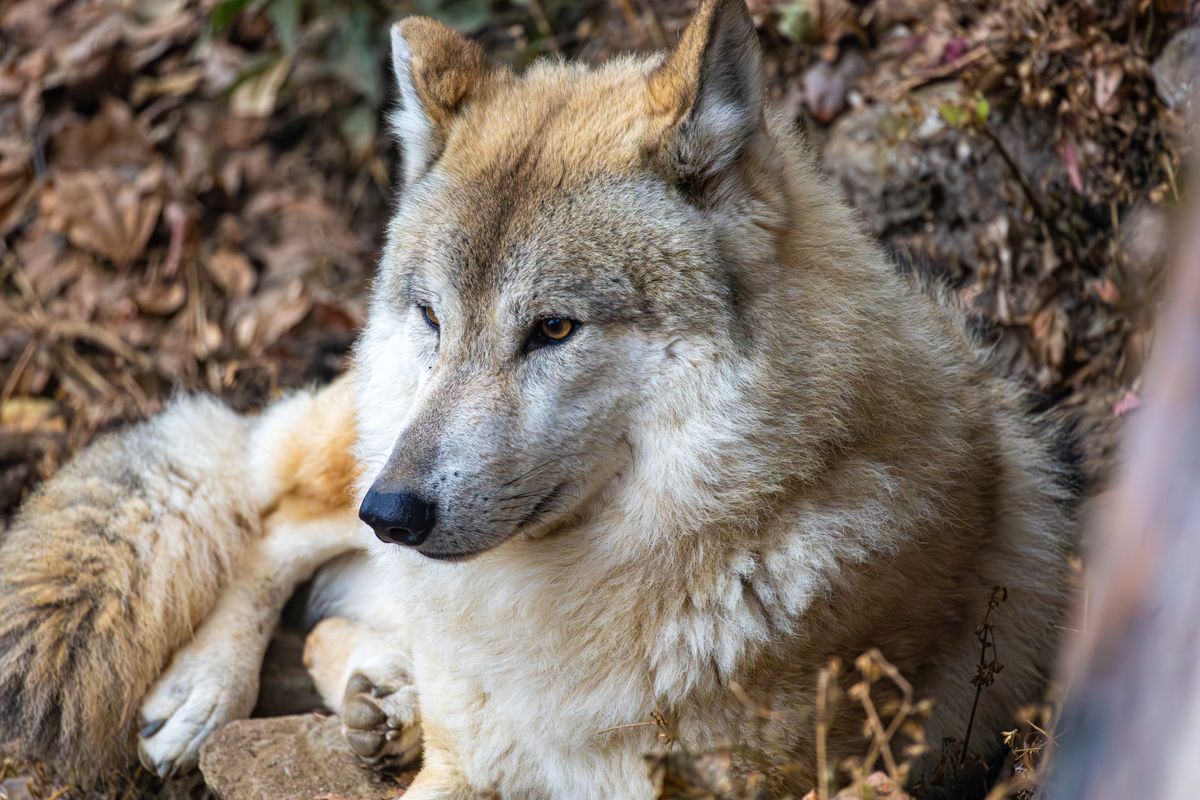
- Wolf (December–January) — Pack loyalty and quiet intensity. Strategic thinker who trusts few deeply. High independence + high loyalty = the principled guardian.
- Owl (February–March) — Wisdom and solitary clarity. Sees what others miss. High reflection + high insight = the truth-teller.
Why This Resonates: The Self-Recognition Moment
When you take the quiz and see your result—"You're a Raven" or "You're a Lion"—there's often a small shock of recognition. Not because the quiz has revealed a hidden truth about destiny. Because it named something you already knew but couldn't articulate.
You've felt like the raven in meetings—quietly observing before you speak, comfortable with ambiguity, seeing patterns others miss. Or you've recognized your lion-ness in how people naturally gravitate toward your clarity and warmth. The archetype doesn't create the trait; it mirrors it back with an identity badge.
That mirror is powerful. It feels accurate not because it's mystical, but because good archetypes are just crystallized personality patterns. MBTI works for the same reason—not because typing is destiny, but because the four-letter code names a cluster of traits you actually recognize in yourself.
The spirit animal adds something MBTI doesn't: a visual identity and a seasonal story. A lion feels different from "ESTP." It gives you something to picture, something to share, something that becomes part of how you narrate yourself.
Birth Season, Personality, and the Long-Term Pattern
The birthday link isn't a daily determinant—it's a statistical tendency. Research on birth-season effects shows measurable but modest correlations:
- Kids born in spring score higher on novelty-seeking and openness (Chotai et al., 2003, personality and season study)
- Winter-born individuals show slightly higher introversion and contemplative traits (no single source is definitive, but the pattern holds across multiple studies)
- These effects are real but not destiny-making. A winter-born person can be highly extroverted; a spring-born person can be deeply reflective
What the quiz captures is the interaction between your birth season's statistical tendency and your actual personality responses. If you're winter-born but scored as a lion? That's data too—you're the rare winter person with summer's relational boldness. That's even more interesting.
Taking the Quiz: What to Expect
The spirit animal by birthday quiz asks two types of questions:
- Birthday and basic info — When were you born? (The season is the baseline.)
- Personality preferences — How do you naturally respond in these scenarios? (Scales measuring the five dimensions above.)
No "right" answers. The quiz has no moral direction—raven is not "better" than lion. It's a map, not a ranking.
Your result includes:
- Your animal archetype — The name and what it represents
- Your seasonal signature — How your birth season shapes your baseline
- Your five-dimension profile — Where you fall on boldness, warmth, instinct, independence, and directness
- How to use this for self-reflection — Understanding your strengths, natural blind spots, and how you show up in relationships
- Optional: a compatibility layer — How your animal archetype blends with others' (partner, friends, coworkers)
FAQ: Real Questions Spirit Animal Seekers Ask
What if my result doesn't feel right?
Take it again with fresh eyes, or sit with the result for a few days. Sometimes archetypes feel accurate sideways—you realize the result isn't who you wish you were, it's who you actually are. That friction is data. On the rare occasion it truly doesn't resonate, the quiz's most likely miss is matching the wrong animal to the right personality profile (someone with eagle vision but coded as hawk). The description, not the label, is the real insight.
Can your spirit animal change over time?
Your baseline archetype (rooted in birth season and core temperament) stays stable. But how that animal shows up evolves. A hawk in their 20s is reckless; a hawk in their 50s is strategic. Same animal, different expression. The archetype is the skeleton; life experience is the flesh. The quiz captures your natural default.
Is this real or just entertainment?
Both. The birthday-season correlation is real psychology (birth season measurably influences personality tendencies). The archetype framework is a legitimate lens for self-reflection (same reason MBTI and enneagrams work—they name real patterns). But it's not predictive destiny, and it's definitely not telling you what to do. It's a mirror and a playground for thinking about yourself differently. Treat it as you would personality tests: useful for reflection, not for life decisions.
How do I know which animal I'll get?
You won't until you take it—that's the curiosity gap that makes the quiz work. But your result will always be one of 12 animals tied to the four seasons. If you're summer-born, you're likely to get a warm, relational animal (lion or dolphin). If you're winter-born, you might get the quiet strategist (raven or wolf). Spring and fall animals scatter across the boldness-caution spectrum. The framework is predictable enough to feel coherent, random enough to feel surprising.
Can I take the quiz multiple times?
Absolutely. If you answer differently based on context (work-self vs. home-self, current-season vs. deep-pattern), you might get a different result. That's also data. Most people find their core animal consistent across multiple takes, but the journey to certainty is half the fun.
What do I do with my result?
Share it if it delights you (that's why the results are designed to be screenshot-worthy). Use it to understand yourself or a friend better. Notice whether you're embodying your animal's strengths in a relationship or a work situation. Or just enjoy the novelty of finally having a name for the pattern. There's no obligation to do anything with a spirit animal. It's an identity badge, not a mandate.
The Real Power of Naming Yourself
Why do personality tests go viral? Because humans crave to be named. We move through the world sensing patterns in ourselves—the way you naturally think, how you connect, what you notice—but rarely get a language for it. When a test crystallizes that into a label ("You're a raven"), it's not magic. It's recognition. It's someone saying, "I see that pattern in you. You're not alone in it. Here's a tribe that speaks this language too."
The spirit animal by birthday quiz does exactly that. It takes the invisible blueprint you were born with—your season, your temperament, your natural way of moving—and gives it a face, a name, a story. And suddenly, you feel less like a stranger to yourself.
That's worth the five-minute investment.
Ready to discover yours? Take the spirit animal by birthday quiz and find out which animal archetype matches your birthday and personality. No sign-up required, results are instant, and you can share your animal with anyone who'll appreciate it.
Not sure if it'll feel accurate? Read what others discovered in their results — and notice how many comment, "This is scarily accurate."
Want a personalized read on this? Discover Your Spirit Animal — a few minutes, instant results.
Related Articles

You Get Compliments… So Why Do You Still Feel Insecure? The “Attractiveness Paradox” Explained
If compliments don’t make you feel better, you’re not broken—you’re stuck in a predictable psychology loop. Here’s how it works and how to fix it.
The Confidence Tax: Why Being Attractive Can Cost You Peace of Mind
When looking good becomes a responsibility instead of a benefit, confidence turns fragile. Here’s the science—and how to reclaim stable self-worth.

The Compliment Hangover: Why Praise About Your Looks Can Make You Feel Less Confident
If compliments don’t land—or they make you feel anxious—you may be stuck on the validation treadmill. Here’s what’s happening and how to break the loop.