What Is My Spirit Animal: Discover Your Personality Archetype
Noah Kim
6/28/2026
What Is My Spirit Animal Quiz: Discover Your Personality Archetype
TL;DR:
- Spirit animals are personality archetypes, not cultural appropriation — each animal reflects core traits (wolf = intuition, owl = wisdom, bear = grounding).
- Your spirit animal isn't fixed — it evolves as you grow; you may connect with different animals at different life stages.
- This quiz maps 15 questions to 12+ animal types, revealing how you lead, relate, and navigate challenges.
- Results aren't destiny — they're a mirror for self-reflection, not a diagnosis or limiting label.
What Does "Spirit Animal" Actually Mean?
The term "spirit animal" gets tangled in cultural sensitivity debates, so let's be clear upfront — and honestly.
A brief, respectful note on the term: "Spirit animal" has genuine roots in Indigenous traditions of the Americas, where it describes sacred, lived relationships between a person and an animal — often established through ceremony, vision quest, or lineage. The Smithsonian's National Museum of the American Indian notes these traditions span 577 federally recognized tribes with distinct practices; they are not metaphors, they are real spiritual bonds. This quiz uses animal archetypes in a different, explicitly non-sacred sense: as a personality-psychology self-reflection tool, drawing on Carl Jung's archetype theory and the universal human habit of processing identity through animal symbols. If you prefer, think of your result as your "power animal" or "animal archetype." The underlying psychology is real — and the cultural distinction is worth a moment's acknowledgment.
In the context of personality quizzes and modern self-reflection, then: a spirit animal is a symbolic archetype — a way to name and explore core personality traits using animal metaphors. It's the same psychological framework as MBTI or the Enneagram, just with more vivid imagery.
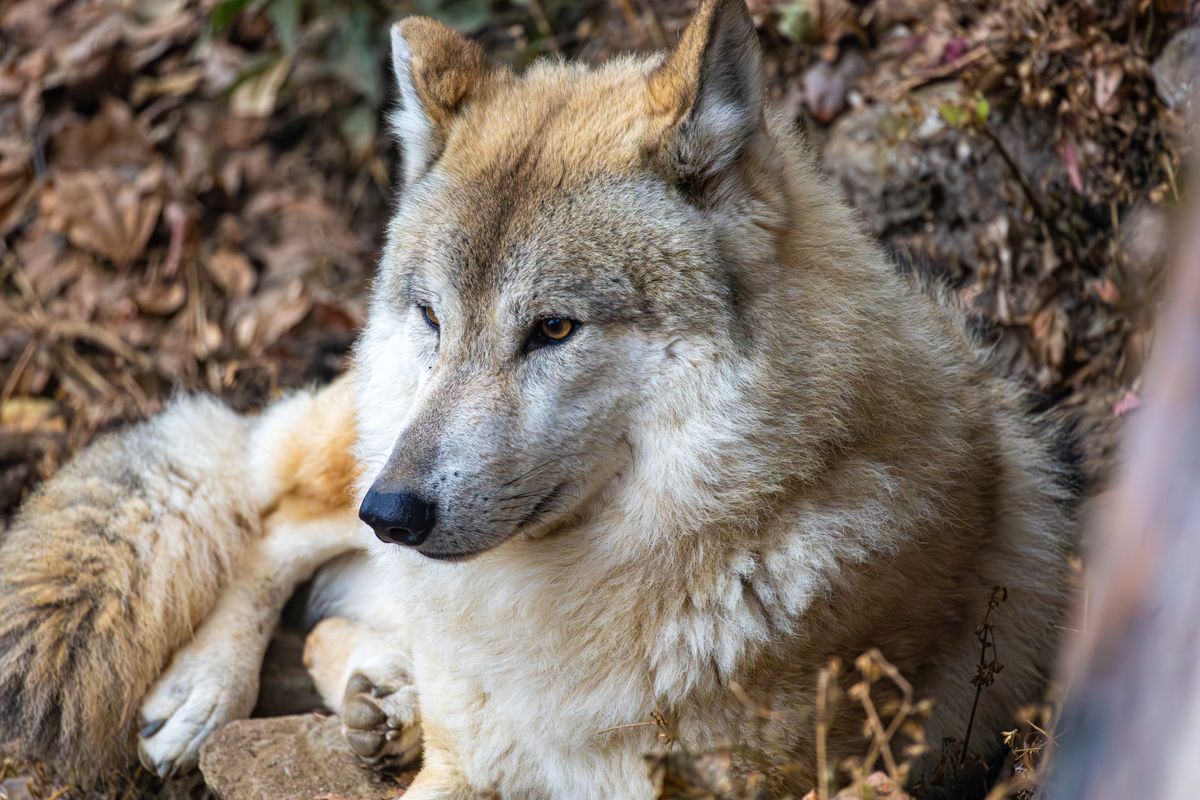
Each animal carries recognizable qualities: a wolf embodies intuition and loyalty; an owl channels wisdom and discernment; a bear represents strength and grounding. These aren't claims about literal spirit guides — they're personality mirrors that help you see yourself more clearly.
Why Spirit Animals Resonate (The Psychology Behind It)
Why do millions take spirit-animal quizzes? The answer runs deeper than "it's fun."
The ancient roots of animal symbolism
There is a reason humans have always told stories through animals. Carl Jung, the Swiss psychiatrist who mapped the architecture of the unconscious, observed that animal symbols appear universally in myths, dreams, and folklore — what he called the collective unconscious, the layer of psyche we all share regardless of culture or era. Animals embody what Jung called archetypes: patterns of instinct, emotion, and meaning that predate language. When you feel a jolt of recognition reading "wolf" or "owl," you are not imagining it — you are noticing a match between an ancient symbolic pattern and something real in your own psychological makeup. A 2025 peer-reviewed neuropsychology study even bridges Jung's archetype theory to modern neuroscience, suggesting these patterns have measurable cognitive correlates.
1. Animals compress complex traits into one image
Instead of reading a long personality profile, you get "I'm a wolf." It's memorable, shareable, and immediately visual — your brain processes a wolf's silhouette faster than it processes five paragraphs of trait descriptions. This is why personality quizzes with named results (Architect, Mediator, Wolf, Phoenix) go viral — the label becomes an identity badge.
2. Animals feel less judgmental than words
If a quiz tells you "you're introverted and analytical," it's neutral. But people often layer shame onto words. Calling the same person an "Owl" or a "Fox" somehow feels more accepting — the animal metaphor softens the message while making it stick. This is why animal-archetype quizzes outperform clinical-language results on social shares.
3. Self-recognition is the real driver — and narrative identity explains why
The highest-engagement result is "this is scarily accurate about me." People share quizzes when they feel seen, not when they learn something new. Personality psychologist Dan P. McAdams (Northwestern University) defines narrative identity as "the dynamic inner story a person crafts to bind the remembered past with the present and the imagined future" — one of three core domains of personality. When an animal archetype clicks — "yes, I am a wolf: loyal, intuitive, fiercely protective" — you are doing real psychological work. You are weaving a symbol into your self-narrative. That is not trivial. It is the same mechanism that makes MBTI, the Enneagram, and every "what character are you?" quiz feel resonant: the brain is pattern-matching the outside symbol against the inner story it already knows. (McAdams et al., Personality Science, 2021)
The 12+ Core Spirit-Animal Archetypes (What You Might Discover)
While spirit-animal frameworks vary, the most common archetypes are:
The Wolf — Intuitive, loyal, pack-oriented. Trusts gut feeling and guides others through loyalty. Risk: can become overly protective or suspicious.
The Owl — Wise, observant, analytical. Seeks truth and understands complex systems. Risk: can detach or overthink.
The Bear — Grounded, strong, introspective. Provides protection and solid judgment. Risk: can isolate or become rigid.
The Phoenix — Resilient, transformative, regenerative. Turns crisis into rebirth. Risk: can glorify struggle or avoid prevention.
The Fox — Clever, adaptive, perceptive. Solves problems through strategy and wit. Risk: can become manipulative or unreliable.
The Eagle — Visionary, commanding, precise. Sees the big picture and acts with focus. Risk: can be cold or dismissive of detail.
The Lion — Confident, charismatic, bold. Natural leader with magnetic presence. Risk: can be domineering or crave constant attention.
The Deer — Gentle, alert, intuitive. Leads through grace and empathy. Risk: can be overly cautious or people-pleasing.
The Serpent — Transformative, mysterious, wise. Sheds old skin and embraces change. Risk: can appear cold or deceptive.
The Butterfly — Transformative, beautiful, optimistic. Finds joy in metamorphosis. Risk: can be flighty or avoid depth.
The Horse — Free-spirited, energetic, spirited. Values independence and honest connection. Risk: can be reckless or hard to tie down.
The Whale — Powerful, deep, emotional. Carries ancient wisdom and emotional depth. Risk: can be withdrawn or heavy-hearted.
Most modern quizzes offer 8–15 types, depending on how granular they want to be.
The Shadow Side of Your Animal (What Most Quizzes Skip)
Here is the psychologically interesting part most animal-quiz sites skip entirely. In Jungian analysis, the animal that shows up in your dreams or self-reflection is often connected to your shadow — the parts of yourself you have not yet integrated. The wolf in your dream is not just "loyalty." It might also be the hunger you suppress, the wildness you have been told to tame.
Jung's central insight was that the instinctual self is not something to overcome but something to know. Your archetype animal, then, is not just a flattering portrait of your strengths — it's an invitation to also claim the parts that feel unruly. The owl's wisdom includes her solitude. The bear's protectiveness includes his ferocity. The fullest version of your archetype holds both.
As Jung observed: "The instincts are a far better protection than all the intellectual wisdom in the world." Jungian analyst Barbara Hannah, who spent decades lecturing on the archetypal symbolism of animals at the C.G. Jung Institute in Zürich, described the animal symbol as carrying both universal archetypal meaning and intensely personal resonance — which is why the same "wolf" lands differently for different people.
How Spirit-Animal Quizzes Compare to Other Personality Systems
| System | What it measures | Why people take it | Share factor | |---|---|---|---| | MBTI/16Personalities | Cognitive functions (thinking, feeling, intuition, sensing) | Career fit, self-understanding | High (puts you in a tribe: "I'm an INTJ") | | Enneagram | Core motivations and fears (9 types) | Deep wound + growth exploration | High (spiritual, transformative) | | Attachment Style | Relationship patterns (anxious, avoidant, secure, disorganized) | Romance/relationship clarity | Very high (couple-shareable) | | Spirit Animal | Core personality archetype via animal metaphor | Identity + fun self-reflection | Very high (visual, mythology, shareable) |
Spirit animals win on pure shareability — a wolf in your profile photo is more magnetic than "INTJ." But they're weakest on actionable advice. An MBTI result tells you how to work with other types; a spirit-animal result tells you who you are, not how to grow. Use spirit animals for self-recognition; use MBTI or Enneagram for guidance.
Worth noting: the appeal of personality typologies at scale is well-documented. The Myers-Briggs Type Indicator remains one of the most widely used personality assessments in the world — not because its psychometric validity is uncontested, but because, as researchers at Positive Psychology note, perceived utility and intuitive resonance drive adoption far more than scientific credentials. The same engine powers every animal archetype quiz. You are in very large company.
What Determines Your Spirit Animal? (The 15 Key Questions)
Our comprehensive spirit-animal quiz asks 15 questions across these dimensions:
1. How you lead (or don't)
- Do you naturally take charge, or prefer to support? Bold or subtle influence?
- Reveals: Are you an Eagle (commanding) or a Deer (guiding through grace)?
2. How you relate to risk
- Do you leap first and look later, or scout ahead? Trust instinct or verify?
- Reveals: Are you a Fox (strategic risk) or a Bear (cautious strength)?
3. How you process emotion
- Do you feel deeply and express, or observe and hold? Sensitive or boundaried?
- Reveals: Are you a Whale (emotional depth) or a Wolf (loyalty over sentiment)?
4. How you seek growth
- Do you reinvent constantly, or build mastery in one thing? Change-seeker or stability-seeker?
- Reveals: Are you a Phoenix (transformation) or a Lion (established presence)?
5. Your energy signature
- Are you high-octane, steady, or contemplative? Solo or social?
- Reveals: Are you a Horse (spirited/free) or an Owl (grounded/observant)?
Common Misconceptions About Spirit Animals
Myth 1: "Your spirit animal is permanent." Not true. The animal you resonate with evolves as you grow. A 22-year-old might be a Horse (free-spirited); at 40, the same person might be an Owl (wisdom-seeking). Your core traits don't change, but how you express them does. Take the quiz again in 5 years — you might be surprised.
Myth 2: "Your spirit animal tells you what you should do." No. It reflects what you already are, not a prescription. If you're a Deer, that doesn't mean you should be passive — it means you naturally lead through empathy. You can choose to develop Eagle traits (vision, boldness) without betraying your core nature. Use the result as a starting point for intentional growth, not as a cage.
One thing worth saying clearly here: an archetype is not a verdict. Jung did not intend the collective unconscious to be a cage — he saw it as a resource. If your result is "deer" (gentle, perceptive, sensitive), that is not a prescription for passivity. Every archetype contains a full range. The point of self-reflection is not to be assigned a box but to recognize patterns — and then, with that recognition, decide what to do with them.
Myth 3: "There's one right answer." Wrong. If you're torn between Wolf and Fox, you probably have strong traits from both. Real humans are hybrids. The closest match in the quiz is your "primary" archetype, but you're not confined to one animal — think of your result as your leading voice, with others in harmony.
Myth 4: "It's cultural appropriation." This one deserves nuance — which we've tried to give it at the top of this article. Indigenous cultures have deep, sacred practices around animal guides; casual pop-culture use of "spirit animal" as a personality metaphor can trivialize those traditions, which is why we name the distinction plainly. What this quiz does is closer to Jungian archetype work than to any sacred practice: animal symbols as mirrors for self-reflection, in the long tradition of human beings telling themselves who they are through the animals that fascinate them. The psychology is real. The cultural distinction is worth holding.
How to Use Your Spirit-Animal Result (Beyond "Cool, I'm a Wolf")
1. Journal on the fit
Does the description resonate? What parts feel exactly right, and what feels off? If 80% fits and 20% doesn't, that's data — you might be a primary Wolf with secondary Owl traits.
2. Ask your people
Show the result to someone who knows you well. Do they agree? Often friends spot patterns we miss. (And yes, this is the "tag a friend" share moment.)
3. Notice where you diverge
If you're a Fox (clever, strategic) but you hate political games, you're probably using Fox traits consciously, not operating from them naturally. That's powerful self-awareness.
4. Identify your shadow
Every archetype has a shadow side (Wolf can be suspicious; Deer can be a pushover). Which shadow do you actually struggle with? That's your growth edge.
5. Find your pair
What spirit animal would your partner / best friend / colleague be? How do your animals interact? (This is gold for relationship and team dynamics.)
FAQ
What if I don't believe in spirit animals?
That's fine — treat this as a personality archetype system, the same way you'd treat Enneagram or Gallup StrengthsFinder. The animal metaphor is just a delivery vehicle for trait reflection. If "Wolf archetype" feels less weird than "I'm a wolf," frame it that way. The insights remain the same.
Can I have more than one spirit animal?
Absolutely. Most people are a primary animal + 1–2 secondary animals. Think of it like personality blending — you might be "Bear with Fox secondary," meaning you're grounded and protective, but with a clever, adaptive streak. The quiz gives you a primary result, but read the secondary matches too.
Does my spirit animal change over time?
Yes, but usually your core archetype stays stable while the expression shifts. A Wolf at 20 (impulsive, pack-driven) might be a Wolf at 50 (protective mentor, loyal elder), but still fundamentally Wolf. If you take the quiz 10 years apart and get a totally different animal, something fundamental has shifted — either you've done deep inner work, or you weren't being honest the first time. Either way, the new result is probably more accurate.
Is this a valid personality assessment?
It's reflective, not clinical. A spirit-animal quiz is to personality psychology what astrology is to astronomy — evocative, shareable, and psychologically useful for self-reflection, but not scientifically predictive. It works best as a conversation starter about who you are, not a definitive diagnosis. Use it alongside MBTI or Enneagram if you want academic rigor.
What if the result doesn't match how I see myself?
That's actually the most valuable outcome. Sometimes we're blind to our own patterns. A result that feels wrong is worth sitting with for a week. Ask: Is the quiz missing something about me, or is there a part of myself I don't want to see? Often it's both.
Take the Quiz
Ready to discover your spirit animal? Take our 15-question spirit-animal personality quiz. You'll get a detailed profile of your primary archetype, your shadow traits, and how your animal shows up in relationships and challenges.
Share your result — tag a friend and ask: What animal do you think I am? (Often the answer is delightfully off or spot-on in unexpected ways.)
The Bottom Line
A spirit animal isn't a literal guide or a prediction — it's a mirror made of imagery. It works because we recognize ourselves in animals faster than we recognize ourselves in words, and because (as Jung understood) animal symbols tap something genuinely ancient in the way human beings process identity. Your spirit animal is valid not because it's mystical, but because self-recognition is powerful. Use it to see yourself more clearly, to start conversations, and to play with identity. And if it feels true, that's enough.
Related Articles

You Get Compliments… So Why Do You Still Feel Insecure? The “Attractiveness Paradox” Explained
If compliments don’t make you feel better, you’re not broken—you’re stuck in a predictable psychology loop. Here’s how it works and how to fix it.
The Confidence Tax: Why Being Attractive Can Cost You Peace of Mind
When looking good becomes a responsibility instead of a benefit, confidence turns fragile. Here’s the science—and how to reclaim stable self-worth.

The Compliment Hangover: Why Praise About Your Looks Can Make You Feel Less Confident
If compliments don’t land—or they make you feel anxious—you may be stuck on the validation treadmill. Here’s what’s happening and how to break the loop.